Energy, mathematically inevitable


Neutrinovoltaics is not a concept but a consequence
Some technologies arise out of need. Others by chance. And a few out of logical necessity. Neutrinovoltaics belongs to the last category – it is not an option but a consequence of physical and mathematical relationships.
The logic behind inevitability
In mathematics there are solutions that do not need to be discussed because they follow compellingly from the premises. If this principle is transferred to physical systems, a remarkable thought emerges: when certain conditions are met, a technological implementation becomes not a possibility but a necessity.
Neutrinovoltaics is based on exactly this structure. Three fundamental pillars lead to a conclusion that is hard to get around.
1. The law of large numbers
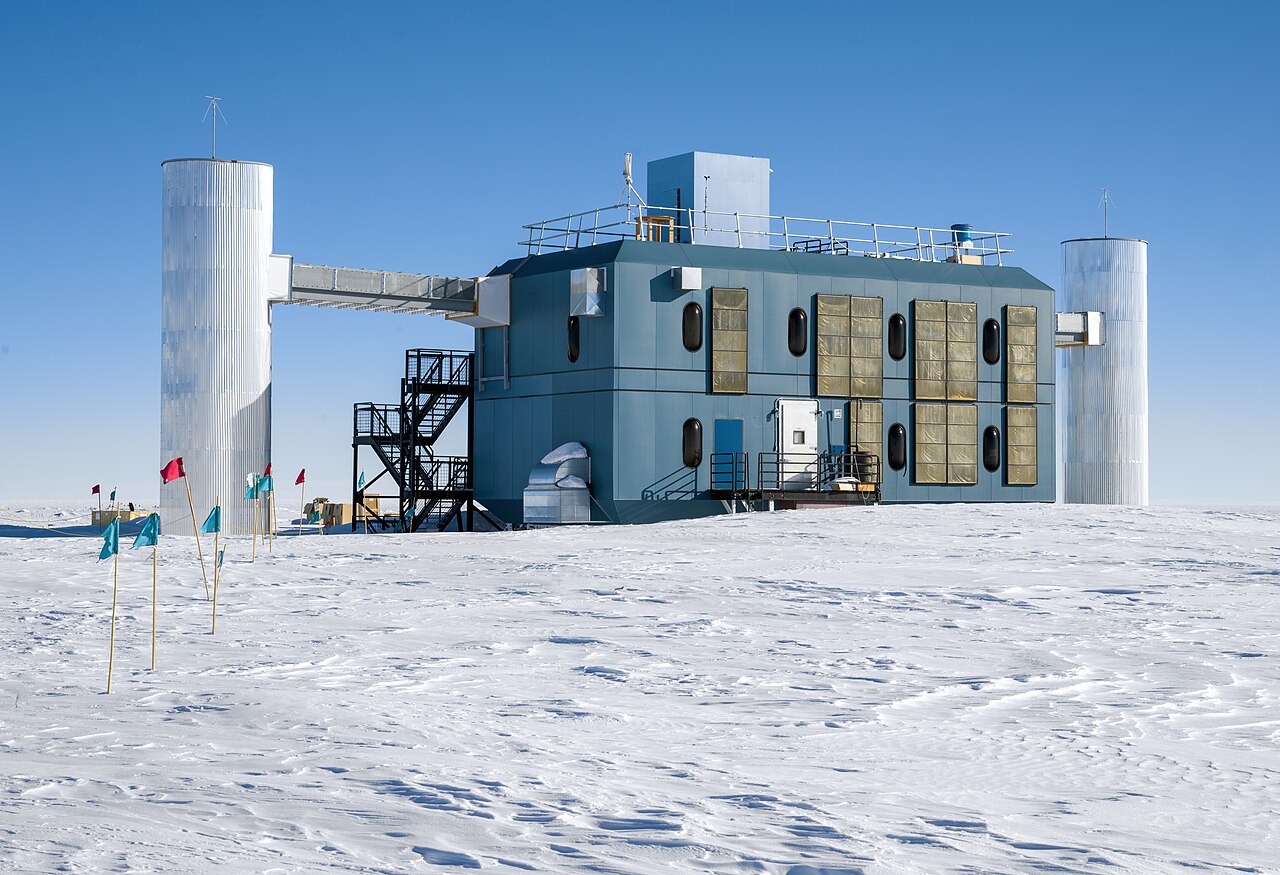
Neutrinos are among the most abundant particles with mass in the universe. Their flux density is enormous: billions pass through every square centimetre of matter every second – regardless of location or environment.
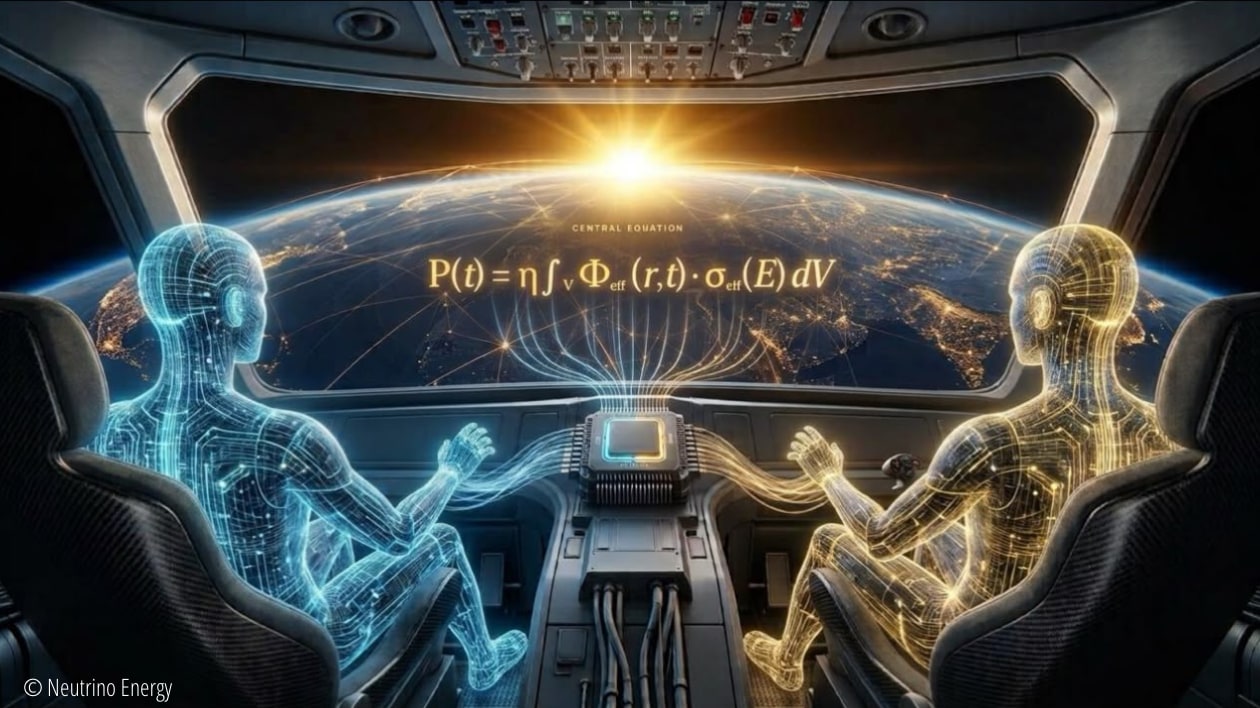
The central question is not whether interactions take place, but how often. Statistically, it is impossible for such a dense stream of particles to remain completely without measurable effects. This is exactly where mathematical modelling comes in: it identifies the point at which probability becomes technical usability.
This shifts the perspective. What was long considered negligible becomes a continuous energy potential.
2. Thermodynamic symmetry instead of entropy
Classic energy generation is based mainly on entropic processes – combustion, friction or decay. These systems are lossy and often destructive.
The alternative approach uses coherent effects at the nanoscale. Instead of extracting energy from chaos, existing motion is converted into structured electrical energy. Physically, this means that thermal or subatomic fluctuations are not dissipated but ordered.
As soon as this process is described in a mathematically consistent way and indicated experimentally – for example by effects in graphene structures or related materials – a clear consequence follows:
Energy flow is not optional but inherent in the system.
3. Scalability in volume
A decisive difference from classic energy sources lies in the geometry of use. Solar cells work at the surface. Their efficiency is directly tied to area and irradiation.
Neutrinovoltaic systems, by contrast, operate in volume. Since penetrating radiation is used, active layers can be stacked without taking up additional space. Output increases in proportion to the internal structure, not to the external dimensions.
From a mathematical point of view, this is an efficient lever: linear scaling without area limitation. A principle that rarely occurs in technology.
Consequences for systems and society
When a physical principle is mathematically compelling, the discussion shifts. Scepticism loses its epistemological basis and becomes a question of the state of implementation.
The implications are far-reaching:
- Economic: energy with minimal marginal costs fundamentally changes existing market mechanisms.
- Technological: self-sufficient systems become independent of environmental conditions.
- Structural: energy availability becomes independent of location – from urban areas to extreme environments.
The decisive point is not the individual application, but the effect on the system. A continuously available energy source changes infrastructure, planning and dependencies at the same time.
Conclusion: from possibility to consequence

Neutrinovoltaics does not primarily stand for a new technology, but for a change of perspective. It shifts the focus from searching for energy sources to using ubiquitous physical processes.
Or, more precisely: if an energy source exists permanently, is statistically effective and can be addressed technically, then its use is no longer a vision – but a question of time. In the context of independence and freedom, this creates a clear connection:
Energy that is available anytime and anywhere eludes central control. It turns from a resource into a property of the environment – and thus into a foundation of individual and systemic self-sufficiency.
Notes on content provided by authors
Comments
Loading comments …
Become a member to comment publicly. GAIA members write comments in the members' portal — under their nickname, visible to everyone.