Generating energy with invisible radiation


Neutrinovoltaics is relatively new as an alternative energy technology
Neutrinovoltaics is becoming increasingly popular in scientific circles. The name is made up of the terms neutrino and photovoltaics, which were combined to form it. It refers to a novel, environmentally friendly technology that makes it possible to use neutrinos and other intangible natural and cosmic radiation spectra to generate electrical energy in an environmentally friendly way.
Photovoltaics has long been an integral part of the energy industry
All of us have heard the word photovoltaics many times. Perhaps less well known than the name itself is the fact that it took around 20 years for the technology to become truly relevant for energy generation after its first steps in the 1970s. Photovoltaics, originally developed for space travel, eventually made the leap to us consumers and into our everyday lives. Until the end of the 1980s, photovoltaic cells were only suitable for tiny electrical devices such as pocket calculators, as they could only supply modest amounts of electricity, which limited their use. It was not until the 1990s that photovoltaics began to play a significant role, as it could be used to generate electricity for household use and other applications. In contrast to fossil fuels such as natural gas, oil or coal, photovoltaics is regarded as a “clean” and sustainable source of energy that (unlike the limited fossil fuels) is available almost without limit.
What are neutrinos?
Neutrinos are very energetic, invisible particles that come from space and travel through time. They are able to reach any place on Earth at any time, much like sunlight. Compared with sunlight, however, neutrinos have the great advantage that they can reach us regardless of the weather, the season or even the time of day. They also have a tiny total mass. Physicists from Canada and Japan were the first to discover that neutrinos have any mass at all. In recognition of their achievement, the two researchers were awarded the Nobel Prize in Physics.
Neutrinos and energy generation
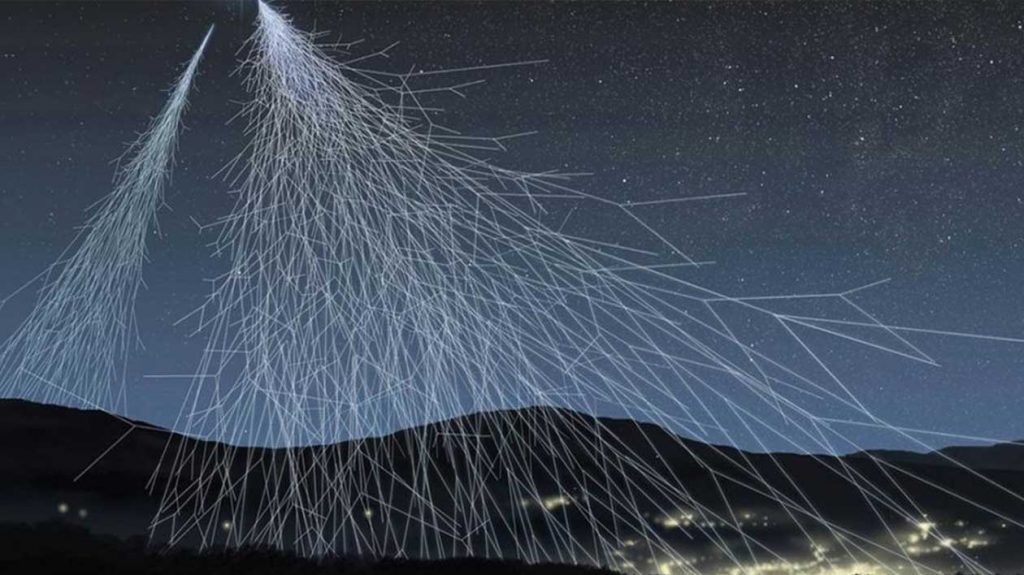
The exciting question now, of course, is how neutrinos can be used to generate energy in the future on the basis of these new findings. Neutrinos penetrate practically all natural materials, including animal and human bodies, and leave no trace. As a result, we are not aware of their presence in our daily lives at all. However, when neutrinos collide with dense, artificially produced matter, they lose part of the energy they have gained through their movement and pass it on to the molecules of the object concerned. In a way, this is comparable to the way the wind moves the rotor blades of a wind turbine, but on a much smaller scale. Every square centimetre of our planet is bombarded by no fewer than 60 billion neutrinos every second. In theory it is possible to create an energy source that is barely detectable, as universities in the United States already proved in 2015.
The Neutrino Energy Group
The Neutrino Energy Group is a German-American research group. Its aim is to find ways to harness the power of the invisible radiation spectrum. As fossil fuels are limited and climate change requires the development of alternative and CO2-neutral energy sources, this research group is dedicated to an urgent problem. It has succeeded in creating a dense substance that can interact in a specific way with neutrinos and other invisible radiation. This unique substance is used to build the first neutrino photovoltaic cells for power generation. Vapour-deposited layers of silicon and doped graphene are applied to the carrier layer to make the end product. The thickness of these layers is in the nanometre range. When neutrinos and other invisible radiation strike this substance, they generate both horizontal and vertical impulses. It is crucial that the doped materials have the right layer thickness. At the optimum layer thickness, the atomic vibrations caused by the impulses are brought into resonance. As a result, an electric current can be detected in the substrate material. The hypothesis states that the amount of energy that can be harvested depends on the distance travelled in the process. With this approach it will soon be possible to charge electrical devices anywhere in the world without needing a socket or a cable. Simply “collecting” energy from the environment is a viable option. As a result, humanity will have access to an endless supply of clean energy, which will help to slow or halt global warming.
The Neutrino® Energy Group works with a worldwide team of scientists and various international research centres. They research applications for converting invisible radiation spectra of the sun, including neutrinos – high-energy particles that reach the Earth incessantly and can be converted into electrical energy.
The image rights lie with the author of the press release.
Notes on content provided by authors
Comments
Loading comments …
Become a member to comment publicly. GAIA members write comments in the members' portal — under their nickname, visible to everyone.









