How charges separate in graphene

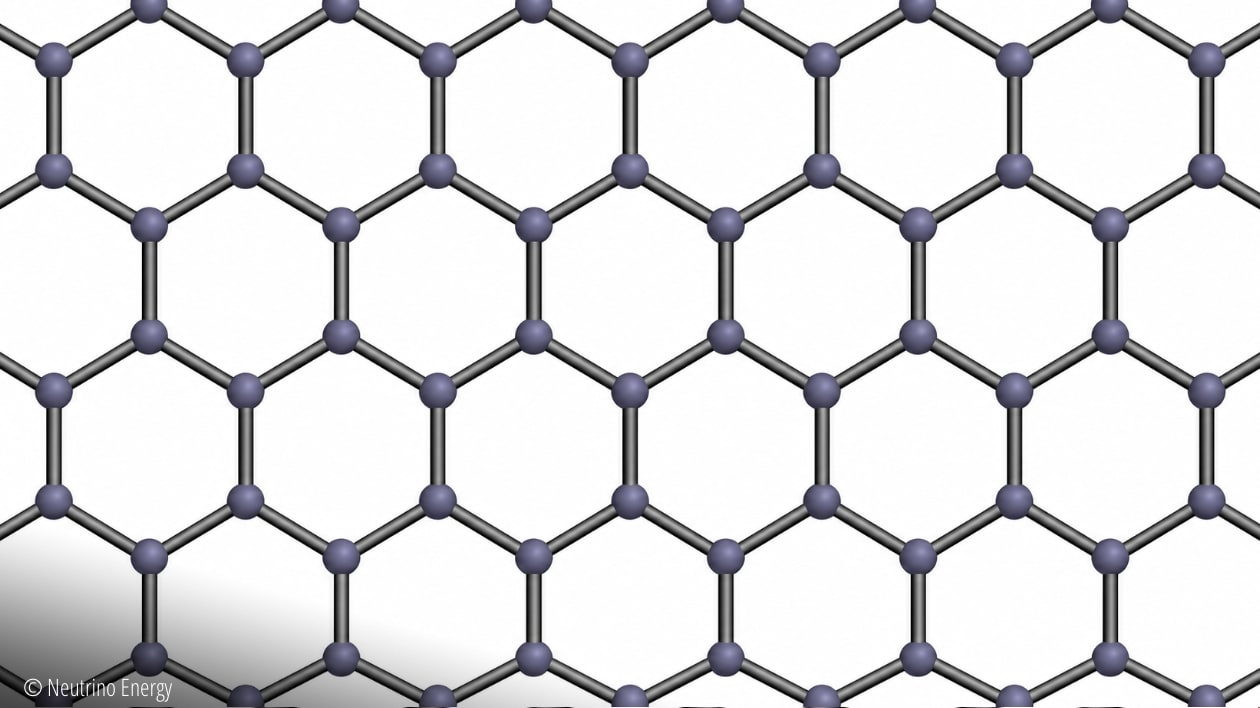
In pure graphene, no spontaneous charge separation takes place without external influences. Electrons and holes move in a disordered way. A hole is a gap left behind by an electron, which behaves like a positive charge carrier. How can these charge carriers be steered so that they collect at different electrodes? For research into fuel-free generators, this is a central question.
How does charge separation occur in graphene?
External fields and barriers. One promising method is to combine a perpendicular magnetic field with artificially created electrical barriers, for example by means of electrodes or local doping. The magnetic field deflects the charged particles. Electrons and holes move along different paths. The electrical barriers can be adjusted so that one barrier holds back electrons and lets holes pass, while another acts the other way round. This separates the charge carriers spatially, and they can flow to different electrodes.
Contact with other materials. Charge separation is often achieved at the interface between graphene and another material, for example a semiconductor such as zinc oxide or a metal. If the work functions of the materials differ, the charge is redistributed on contact. An electric field forms at the interface. If incident light generates electron-hole pairs in the semiconductor, this field can separate the charge carriers. The electron can pass into the graphene while the hole remains in the semiconductor. This mechanism is used in photodetectors and solar cells.
Moiré patterns and bilayer graphene. If two layers of graphene are twisted slightly against each other, a moiré pattern forms. With this pattern, the electronic structure also changes at regular intervals. Under these conditions, the energy spectrum can be controlled locally. In this way, barriers can arise that favour a spatial separation of the charge carriers.
Laser excitation. In special structures, such as narrow graphene ribbons, a short, intense laser pulse can excite charge carriers locally. By choosing the energy and polarisation of the light deliberately, it is possible to make electrons collect in one region and holes in another.
Once they are separated, it is important to guide the charge carriers quickly to the electrodes. If electron and hole meet again beforehand, they can recombine. The charge separation achieved earlier is then lost.
How is neutrinovoltaic technology constructed?
In neutrinovoltaic technology, developed by a team at the Neutrino Energy Group under the leadership of Holger-Thorsten Schubart, the interfaces between graphene and doped silicon play the decisive role. Layers of both materials are applied alternately onto a metal foil. According to the company, each layer is 10 to 20 nanometres thick.
The developers explain how this combination works in three steps. According to their model, neutrinos and other forms of background radiation transfer tiny impulses to the graphene lattice and excite lattice vibrations. Through the interaction between these vibrations and the electrons, the movement of the lattice is supposed to be transferred to the mobile charge carriers in the graphene. The layered system is supposed to rectify this initially disordered motion so that a direct current results.
What role do the layer boundaries play?
Graphene is a semimetal without a band gap. For the directed separation of charges, the developers therefore rely on the transitions between the materials. They compare their effect to a one-way valve. As with a p-n junction or a Schottky barrier, charge carriers are supposed to cross the interface more easily in one direction than in the opposite direction.
In this description, the doped silicon takes on the function of a filter. The deliberately introduced foreign atoms are supposed to influence the scattering of the electrons and favour one direction of movement. The developers call this oblique scattering. In their model, the external excitation provides the impetus for the vibration of the lattice. The asymmetry of the layer structure is supposed to determine in which direction the charge preferentially flows away.
Conclusion
As Neutrino Energy itself stresses, there is a considerable gap between the experimental data reported by the company and their theoretical explanation. The Neutrino Energy Group continues to pursue industrial implementation. As to what contribution the technology might one day make to decentralised self-sufficiency, one question above all remains open. How much energy does the material absorb from outside, under which conditions, and how much of it can be extracted as electrical power?
Sources
- Charge separation in graphene – Russian version of the German original, L. K. Rumyantsev, Planet Today, 25 November 2026.
- Russian-language article by Neutrino Energy.
Cover image: Neutrino Energy
Notes on content provided by authors
Comments
Loading comments …
Become a member to read and write comments. GAIA members read and write comments in the members' portal.
Become a member Already a member? Read the comments in the portal →