Charge for change


Digitalisation and growing crises require faster responses
With its ambitious goal of making Europe climate-neutral by 2050, the EU Commission has given an important impetus. But implementation must be gradual and consistent, as time is short. All the more so because protecting our climate involves many different areas that are closely interwoven.
Existing systems and path dependencies make drastic changes difficult. A plan is needed that takes into account elements from different sectors such as the energy industry and the automotive industry. The transport sector in particular plays an important role, and electrification is becoming ever more important. This article focuses on electric mobility in the transport sector. The EU decision to ban combustion engines from 2035 was welcomed by legislators in Brussels. This has prompted many companies to switch increasingly to electric mobility and adapt their production accordingly.
Electricity suppliers become mobility service providers
Nevertheless, the transition from combustion engines to lower-emission electric vehicles requires some adjustments. Energy companies, traditionally seen only as electricity suppliers for private households, are now partly redefining themselves as intermediaries for mobility services. As a result, the value chains of the automotive and energy sectors are converging more and more. Since electric cars need electricity, municipal utilities and suppliers are expanding their market presence to reach new customer groups with services around electric mobility. Examples include setting up public charging stations, working with hardware suppliers to install charging stations, or complete packages consisting of a solar power system, a charging station and a storage solution. Another example is a unique self-charging car coming onto the market soon that will usher in a new era of electric mobility.
The journey is the destination
About 60 per cent of electric car owners prefer to charge their vehicles at home. This makes sense, as it is usually cheaper than public charging stations, and most people use their vehicle for the daily commute or for errands nearby, such as grocery shopping. For longer journeys, however, careful planning is required, and fast-charging options, often found near motorways, should be used. But it is not only important to expand the charging infrastructure. Providers are also concentrating on operation and functionality, with resource and financial management playing a decisive role.
A standardised technical solution is needed to monitor the processes associated with charging and to promote long-term growth by unifying the currently fragmented market. Another interesting area is the electrification of fleets, be it a company’s private fleet or even city buses. Sophisticated charging control can help manage usage, set priorities and determine areas of use for users, while at the same time providing energy suppliers with important data on consumption patterns and load profiles.
There are solutions such as vehicle-to-grid (V2G) and vehicle-to-load (V2L) to balance possible peaks in future electricity demand. This makes electric vehicle owners not just electricity consumers but also electricity producers. At times of high demand, for example to stabilise the grid frequency, they can feed electricity back into the grid. Meanwhile, at times of increased (renewable) energy supply, they can consume it by charging. There are numerous potential applications for these electric mobility options.
The Pi Car – electric mobility redefined
At a time when renewable energy and ecological balance are becoming ever more important, the automotive industry is looking for a revolutionary innovation that could change the way we see electric cars. Welcome to the Pi Car initiative, a bold and innovative project with the potential to completely revolutionise electric mobility. Imagine a car that charges its energy simply by parking outdoors for an hour and can then drive up to 100 kilometres without ever having to be plugged into a socket. This seemingly unrealistic concept is about to become reality. The Pi Car initiative is the result of creative thinking by the Neutrino Energy Group in cooperation with C-MET Pune and SPEL Technologies Pvt. Ltd. from India. Under the inspiring leadership of the visionary mathematician and CEO of the Neutrino Energy Group, Holger Thorsten Schubart, the team is working tirelessly to put this pioneering concept into practice. Schubart’s passion for neutrino-based energy solutions goes back to 2014, and his tireless determination has led this pioneering project to success.
At the heart of this innovative venture is a group of respected scientists and experts who contribute their special expertise. The renowned physicist Dr Thorsten Ludwig provides important insights into the complex world of neutrinos and other invisible radiation. Dr Rajendrakumar Sharma, the esteemed technical project manager for the initiative in India, holds an important position in the field of state-of-the-art energy storage systems and has been honoured as the “father of supercapacitors in India”. Dr Vijay Bhatkar, praised as the “architect of the Indian supercomputer PARAM”, brings his extensive computing knowledge to the project.
Unlike conventional electric vehicles (EVs), the Pi Car does not depend on electricity from the grid. It is equipped with neutrinovoltaic technology that allows the vehicle to generate its own energy from the infinite stream of neutrinos and other invisible radiation. The vehicle’s structure, consisting of a composite sandwich of graphene and silicon in a carbon matrix, plays a decisive role in energy generation. The electron flow is stored in state-of-the-art supercapacitors and batteries and monitored by an AI-supported unit that controls the drive. The Pi Car is a big step towards sustainable mobility that reduces dependence on the power grid and mitigates the environmental impact of electricity generation.
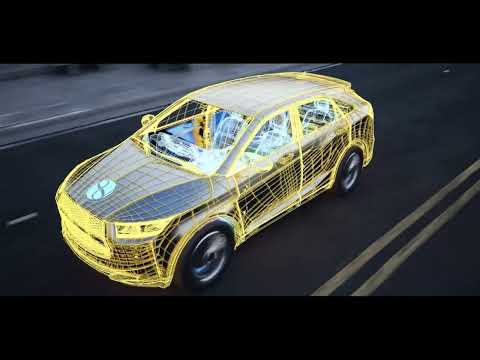
The team behind the Pi Car project has a budget of 2.5 billion euros to realise this remarkable venture. Within the next three years the team wants to present this technologically innovative “miracle” to the world and thereby set a significant milestone for electric mobility. This debut will not only usher in a new era of electric mobility but also lay the foundation for a sustainable future for generations to come. The Neutrino Energy Group and its partners are ready to write history and change our understanding of energy and transport for good. On the way to a future dominated by electric vehicles, we must broaden our focus beyond merely changing the energy source of our vehicles. The transformation of the automotive industry and our efforts to reduce carbon emissions require a comprehensive view, creative thinking and, above all, sustainable energy sources.
The Pi Car is therefore more than just a development in electric mobility; it is a symbol of the changing understanding of a more sustainable and energy-independent future. The introduction of electric cars is imminent and offers the opportunity to reshape our idea of mobility. If we include cutting-edge technologies such as neutrinovoltaics in this vision, we can accelerate the transition to a sustainable future. A future in which the roar of engines gives way to the quiet hum of electric motors, billowing clouds of exhaust are replaced by clear skies, and dependence on limited resources is overcome by the endless dance of neutrinos.

Notes on content provided by authors
Comments
Loading comments …
Become a member to comment publicly. GAIA members write comments in the members' portal — under their nickname, visible to everyone.