G20 meeting in New Delhi


Milestone reached for the Neutrino® Energy Group
The Neutrino Energy Group and Indian researchers have launched a cooperation worth billions. It is based on completely new, sustainable technologies and drives the development of a groundbreaking generation of electric vehicles. This pioneering project is now receiving an additional boost from the broad recognition it gained during the G20 meeting.
The German-American research company Neutrino Energy Group is working with the renowned Indian state research institute C-MET Pune to develop a revolutionary technology in the field of electric mobility. CEO Holger Thorsten Schubart is passionately committed to environmentally friendly energy sources and a new generation of vehicles. Together with his Indian partners, he is increasing the investment volume for this visionary project in India to 3 billion euros.
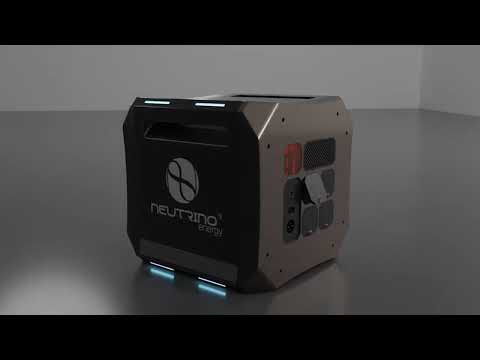
In cooperation with Rajendrakumar Sharma, Managing Director of SPEL Technologies Pvt. Ltd., the Neutrino Energy Group is realising the pioneering project of self-charging Pi Cars. The Pi Car uses the innovative and patented neutrinovoltaic technology as its energy source. This advanced technology uses various energy sources from the environment, such as neutrinos, electromagnetic waves and temperature differences. In close cooperation with an international consortium of companies, researchers and partners, this neutrinovoltaic technology is also being integrated into other electrical devices developed by the Neutrino Energy Group. An outstanding example is the fuel-free generator called the Neutrino® Power Cube.
The Pi Car cleverly exploits the unique properties of graphene. In a sophisticated “material sandwich”, this remarkable material is seamlessly integrated into the carbon-fibre body core, together with doped silicon in numerous extremely thin layers. The precise geometry of this construction creates micro-vibrations that generate a continuous flow of electrons, i.e. direct current. This is stored in supercapacitors and batteries and made available to the vehicle via an intelligent control system optimised by artificial intelligence.

Without the need for a charging cable, one hour of parking at an outside temperature of 20 degrees Celsius provides an impressive 100 kilometres of range. This innovative system enables extremely efficient energy generation and storage, resulting in exceptional autonomy without annoying intermediate charging.
The Neutrino Energy Group quickly realised that efficiency and optimisation were the central challenges as neutrinovoltaic technology made its way from theory to reality. At this point artificial intelligence (AI) entered the stage as an invaluable partner, with its remarkable capabilities in data analysis, pattern recognition and decision-making. AI contributes to the continuous improvement of all aspects of neutrinovoltaic systems and is at the forefront of this synergy. Particularly noteworthy is the role of AI-controlled smart energy harvesting, which would hardly be conceivable without the crucial involvement of AI. This is how it works:
- Data collection: In the neutrinovoltaic systems, sensors continuously collect information that assesses the environmental conditions and records and optimises the energy conversion.
- Real-time analysis: The data is processed in real time by AI algorithms to identify patterns and trends in ambient energy activity and in the energy efficiency of the systems.
- Proactive modelling: Using previous data, AI models forecast the future energy flow and the conversion of energy into direct current, which enables proactive adjustments.
By seamlessly integrating artificial intelligence into neutrinovoltaic systems, the Neutrino Energy Group has not only increased the efficiency of energy generation but also significantly improved adaptability to dynamic environments. As a result, the conversion of clean energy is maximised, making neutrinovoltaics an extremely practical and reliable energy source for a wide range of applications.
Mathematician Holger Thorsten Schubart heads the company and works closely with a group of outstanding international scientists, including physicist Dr Thorsten Ludwig, who acts both as CTO and as technical project manager for India.
The Neutrino Energy Group has concluded an important agreement with C-MET Pune, a leading research laboratory of the Indian government’s Ministry of Electronics and Information Technology (MeitY). It involves intensive further research and development of crucial materials, in particular key components for the innovative Neutrino Power Cubes and the fascinating Pi Car concept. C-MET, previously headed by Director General Dr Bharat Kale and widely known for its outstanding expertise in modern materials science and quantum technologies, is undergoing an exciting development. Dr Kale is now taking over as head of Neutrino Energy Group India.
The Neutrino Energy Group has also concluded an investment agreement with SPEL Technologies Pvt. Ltd. to ensure the necessary support for manufacturing the desired energy storage units for integration into Pi Cars, Neutrino Power Cubes and future applications. SPEL Technologies is not only India’s first but currently also its only manufacturer of supercapacitors and their advanced developments. SPEL is also an important industrial partner of CoERBT, an initiative of MeitY-CMET. Dr Rajendrakumar Sharma, CEO of SPEL Technologies, is widely regarded as the pioneer in the field of supercapacitors and is also a member of the Neutrino Energy Group’s scientific advisory board.
To advance the development of the Pi Car in India, Surya Sharma – in his role as future commercial managing director and chief operating officer of Neutrino Technologies in India – plans to use the combined know-how of these synergies for the Atmanirbhar Bharat mission. This government initiative aims to make India autonomous in all areas in the coming years and to promote the country’s self-sufficiency.
The Pi Car project is also supported by Dr Vijay Bhatkar, Chancellor of Nalanda University and a member of the Neutrino Energy Group’s scientific advisory board. Dr Bhatkar, known as the “father of the Indian supercomputer PARAM”, contributes his extensive expertise and advice to the development of the Pi Car. His contribution will be of crucial importance in advancing India’s vision and commitment to reducing its carbon footprint and establishing new green technologies.
The Neutrino Energy Group has set itself ambitious goals and aims to get the Pi vehicle on the road in less than three years. The concept of the Pi Car and the Neutrino Power Cube represent significant progress in the development of clean and sustainable energy sources. These innovations will not only help reduce our dependence on fossil fuels and minimise total emissions of carbon compounds, but will also help create new jobs and support economic growth in India.
The Pi Car is not just another electric car. Rather, it represents a completely new way of thinking about the future of electric mobility. Any electric vehicle, regardless of the manufacturer, can become a Pi model using neutrinovoltaic technology. As the Neutrino Energy Group, we do not intend to manufacture these vehicles ourselves on a large scale. Instead, we are seeking close cooperation with the international automotive industry, gladly also in Germany, to enable large-scale industrial production.
In addition, existing electric vehicles will in future be offered retrofitting options using individual body components, enabling so-called e-car smart tuning and increasing range. Electric vehicles are now mature in terms of their drive. Our main focus is therefore on where the electricity they need actually comes from, and how the concept of electric mobility can be optimised in terms of energy technology in the coming years so that drivers of such vehicles get real benefits. At the same time, we also want to make sure that the environment actually benefits in a lasting ecological way.

Holger Thorsten Schubart
CEO of the Neutrino Energy Group
Source – energiewirtschaft.io (German)
The speech
Ladies and gentlemen, esteemed leaders of the world,
Meine Damen und Herren, geschätzte Staats- und Regierungschefs der Welt,
Today, I, Holger Thorsten Schubart, the founder and CEO of the Neutrino Energy Group, stand before you not as a solitary individual, but as a representative of a collective of exceptional intellects hailing from every corner of the globe. We do not approach you as mere individuals but as guardians of an extraordinary odyssey, one that has transported us from the theoretical realms of physics to the precipice of a technological renaissance. Today, our purpose is to impart to you a vision – a vision of a world transmuted by the boundless promise that lies within the realm of neutrinovoltaic technology.
As we embark on this journey of discovery, we would like to take a moment to reflect on the incredible progress we have made over the years. It was not so long ago that the concept of neutrinovoltaics was met with skepticism, seen as a pursuit of the impossible. But in the spirit of scientific inquiry and the relentless pursuit of knowledge, we uncovered a revolutionary path that has the potential to reshape our world.
Our story begins with a particle so elusive that it can pass through solid matter with ease – a particle so abundant that it permeates every corner of the universe. We are talking about the neutrino. This tiny, ghostly particle, once considered insignificant, has now become the cornerstone of a monumental transformation in the realm of energy generation.
In 2014, our journey into the world of neutrinos and other non-visible radiations began. It was a journey fueled by curiosity, by the belief that there must be a better way to harness the energy that surrounds us. As we stand here before you today, we are reminded of the words of the great physicist Albert Einstein, who once said, “Imagination is more important than knowledge. For knowledge is limited, whereas imagination embraces the entire world, stimulating progress, giving birth to evolution.”
Einstein’s wisdom rings true in the story of neutrinovoltaics. It was through imagination and the relentless pursuit of innovation that we began to see the untapped potential of the neutrino—a particle so abundant that even as we speak, trillions of them are passing through each and every one of us.
The breakthrough moment arrived in 2015 when esteemed energy physicists Arthur B. McDonald and Takaaki Kajita made a groundbreaking discovery that neutrinos have mass. This revelation confirmed the universal principle of E=mc2, which states that all mass contains energy. It was a eureka moment, a confirmation of our belief that we could tap into the hidden energy of the universe.
With this newfound knowledge in hand, we embarked on a journey to harness the power of the neutrino and other non-visible radiations. But we did not do it alone. The Neutrino Energy Group is a testament to international collaboration, a coalition of brilliant minds from Germany, the United States, and countries around the world. Together, we have worked tirelessly to transform the theoretical into the tangible.
At the heart of neutrinovoltaics lies a multilayer nanomaterial composed of graphene and doped silicon. This remarkable material, combined with the power of artificial intelligence and quantum technology, has enabled us to create devices capable of converting the kinetic energy of neutrinos and other non-visible radiations into electrical power. It’s a feat that challenges the very essence of how we think about energy generation.
But neutrinovoltaics is not merely a scientific curiosity; it is a beacon of hope for a world grappling with the urgent challenges of climate change and energy sustainability. It offers a path toward a future where our energy needs are met without depleting finite resources or harming our planet.
So, what does this amazing world of neutrinovoltaics look like? Picture a world where every home, every building, and every device is powered by clean, renewable energy, courtesy of the neutrinos and other non-visible radiations that flow through our world unseen. Imagine a future where energy scarcity is a thing of the past, where remote and underserved communities have access to reliable and sustainable power sources.
One of the most exciting applications of neutrinovoltaics is the Neutrino Power Cube. These compact, efficient devices are capable of yielding a net power output ranging from 5 to 6 kilowatts. They have the potential to revolutionize energy generation at the individual and community levels. The field trials for the Neutrino Power Cubes are already underway in Austria, where hundreds of units are being tested in real-world scenarios. These trials will provide invaluable insights into the practical integration of neutrinovoltaics into our daily lives.
But the impact of neutrinovoltaics extends far beyond individual power generation. It has the potential to transform transportation as we know it. The Pi Car, a remarkable creation powered by neutrinovoltaic technology, represents a glimpse into the future of sustainable mobility. Imagine a world where our vehicles draw their power directly from the neutrinos that surround us, eliminating the need for traditional fuel sources and reducing carbon emissions.
The possibilities are boundless, but our journey is far from over. As we stand on the precipice of a new energy era, we are faced with both immense challenges and unprecedented opportunities. It is incumbent upon us, as leaders of our nations, to recognize the transformative potential of neutrinovoltaics and to embrace it as a powerful tool in our collective efforts to combat climate change and secure a sustainable future.
We call upon each of you to consider the role that neutrinovoltaics can play in your respective nations. It is a technology that knows no borders, a force for good that can benefit all of humanity. Let us work together to remove the barriers that may impede its progress, to ensure that the scientific community has the resources and support it needs to continue exploring the boundless potential of neutrinos and other non-visible radiations.
In conclusion, we stand before you not as lone scientists but as representatives of a global community united by a shared vision. The world of neutrinovoltaics is a world of endless possibilities, a world where the energy of the universe is harnessed for the betterment of all. It is a world where the power to transform our planet lies within our grasp.
As we leave this summit and return to our respective nations, let us carry with us the spirit of innovation, collaboration, and hope that defines the neutrinovoltaic revolution. Together, we can usher in a new era of clean, sustainable, and abundant energy for generations to come.
Thank you, ladies and gentlemen, for your attention and your commitment to shaping a brighter future for all of humanity.
Holger Thorsten Schubart, CEO of the Neutrino Energy Group

Notes on content provided by authors
Comments
Loading comments …
Become a member to comment publicly. GAIA members write comments in the members' portal — under their nickname, visible to everyone.