Power generation under the influence of energy fields


Our sun as the largest energy supplier
Our Earth receives most of the energy it needs from the sun. Over the course of a year, each square metre of the Earth’s surface receives on average about 342 watts of solar energy per hour. This adds up to a huge amount of energy – roughly 44 quadrillion (4.4 × 10¹⁶) watts of power. A single comparatively large power station can generate about 1 billion (1 × 10⁹) watts of electrical power. So to match the amount of energy produced by the sun, 44 million such power stations would be needed.
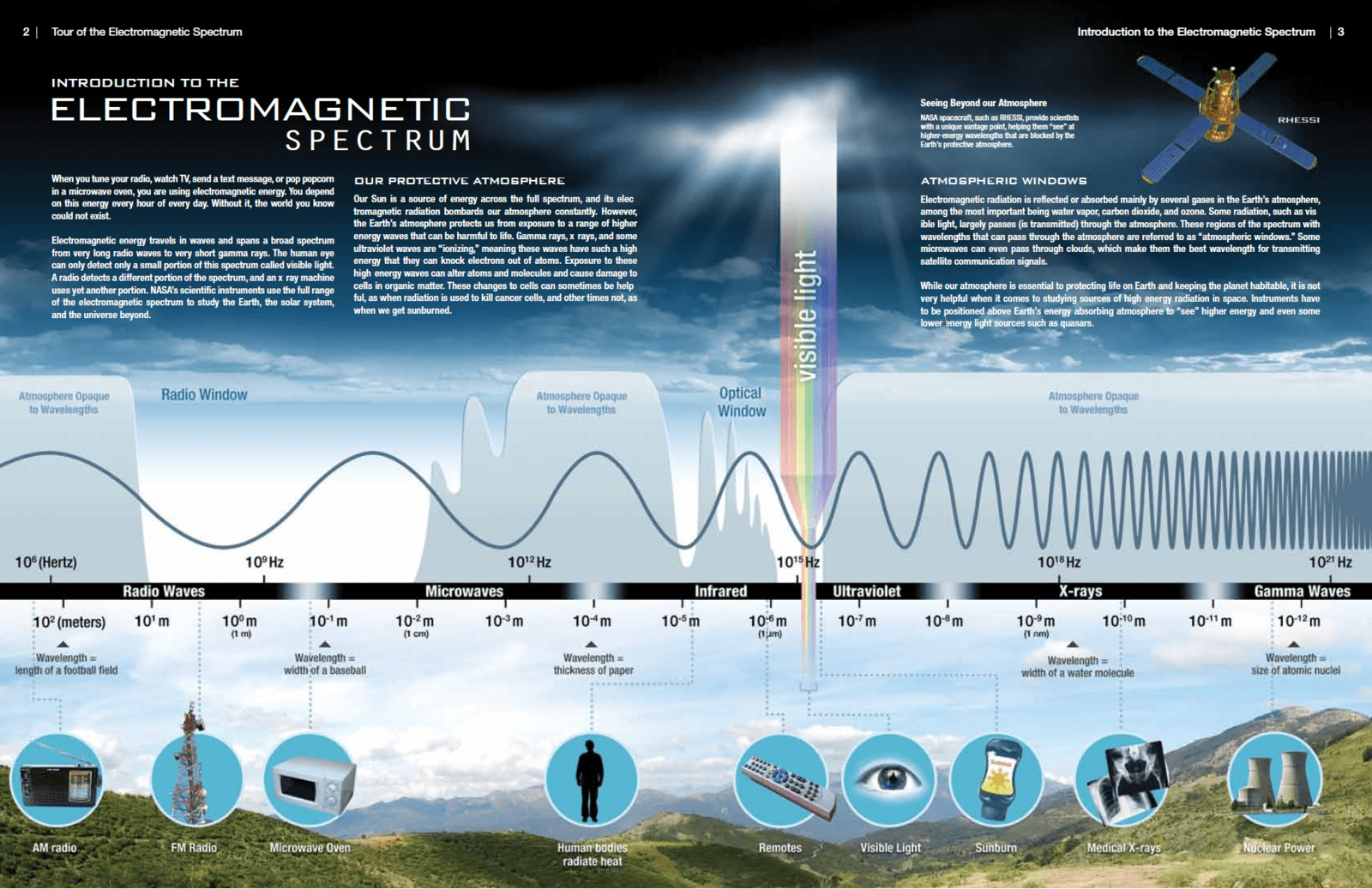
Thanks to the hard work of many brilliant minds over recent decades, the sun’s energy can be harnessed for humanity’s needs. Sunlight usually consists of three main components: visible light with wavelengths between 0.4 and 0.8 µm, ultraviolet light with wavelengths below 0.4 µm and infrared radiation with wavelengths above 0.8 µm. However, sunlight makes up only a fraction of the entire radiation spectrum that reaches the Earth.
SOURCE: radiation-dosimetry.org
Despite great progress in solar energy, this power generation technology is still heavily dependent on the weather and cannot be used to generate electricity everywhere on Earth. Developing technologies for generating electricity from radiation of the invisible spectrum – which is present at every time of day and everywhere on Earth, and whose intensity does not depend on weather conditions – is therefore a priority for scientists.
Neutrinovoltaics is the name of a technology developed by scientists at the Neutrino Energy Group that can harness the power of neutrinos and other forms of invisible radiation. The name does not imply that electricity is generated solely by converting the kinetic energy of neutral neutrino particles into electric current. The President of the Neutrino Energy Group, Holger Thorsten Schubart, has stressed in numerous speeches that the name neutrinovoltaics, which contains the name of the “neutrino” particle, is more a brand than a description of the technology itself.
The company’s scientists have succeeded in creating a nanomaterial that converts the energy of the surrounding energy fields of the invisible radiation spectrum into electricity. Neutrino® Power Cubes can be set up outdoors, indoors or, for example, in the basement of an apartment building, because the energy fields are present every minute of the day regardless of the weather and have a high penetrating power.
The structure of the nanomaterial is the core of the technology and the know-how of the discovery. The nanomaterial is applied layer by layer to the metal foil, forming a densely compacted thin layer that forms a unit with the foil. This prevents delamination of the nanomaterial during operation and a loss of its performance characteristics. The nanomaterial consists of alternating layers of graphene and doped silicon.
Although Professor Thibado (University of Arkansas) has shown that a graphene layer between two copper plates generates alternating current even without dopants, the frequency of the alternating current is directly inversely correlated with the number of graphene wave contacts with the copper plate.
Using a scanning tunnelling microscope, the experimenters observed that a wave forms in graphene like a wave on the surface of the sea, i.e. graphene cannot exist in the 2D plane, only in 3D. This behaviour of graphene enabled the Neutrino® Energy Group to create a power-generating nanomaterial.
A single layer of graphene produces very little electricity, which is difficult to use in practice. The Neutrino® Energy Group has applied the process of layering graphene and silicon. Doping the nanomaterial is intended not only to increase the output, but also to rectify the current generated so that it flows in the same direction.
Graphene and silicon belong to group 4 of Mendeleev’s periodic table of chemical elements and have 4 covalent bonds. And while the specific conductivity of graphene is close to that of metals such as copper, silicon belongs to the class of semiconductors. The concentration of natural charge carriers in silicon at room temperature is about 1.5⋅10^10 cm^-3. To create n-type electronic or electrical conductivity in silicon, silicon is therefore doped with elements from group 5 or 6 of Mendeleev’s periodic table, as stated in patent EP3265850A1. The patent also states that graphene is doped with chemical elements that have magnetic properties.
The electric current generated by the nanomaterial when it is applied to a metal substrate flows in one direction. The question arises: why is direct current generated rather than alternating current, as in Professor Thibado’s experiments? In the nanomaterial, the graphene waves of each layer act equally on the two silicon plates between which the graphene layer lies, and according to Lenz’s law the electromotive force of induction in a closed circuit is equal and opposite in sign to the rate of change of the magnetic flux through the surface, so charged particles should be directed in both directions – but they are directed in only one.
An analysis of patent number EP3265850A1 shows that doping takes place in addition to graphene and silicon. The doping elements include germanium, which is applied to silicon layers, and graphene doped with samarium oxide. Layers of these elements can form a p-n junction that creates a film diode effect, letting electric current flow in only one direction and blocking its passage in the other.
Next year, two industrial plants are due to go into operation in Switzerland and Korea. While a small plant is being built in Switzerland (100,000 generators with an output of 5–6 kW), a mega factory is being built in Korea that is due to reach an annual production capacity of 30 GW by 2029, with production volumes increasing further. Negotiations are currently under way on setting up industrial production of neutrinovoltaic generators in a number of other countries.
A self-charging electric car, the Pi Car, is currently being developed on the basis of neutrinovoltaic technology. Its body will be fitted with cells that generate electricity under the influence of the surrounding energy fields and the warmth of solar radiation. Development of the Pi Car electric car is planned within 3 years. Neutrinovoltaic technology opens the way for humanity to tap the limitless energy of the radiation fields of the invisible spectrum. This new knowledge will take humanity to the next stage of development and allow us to use natural resources rationally and sparingly.
Notes on content provided by authors
Comments
Loading comments …
Become a member to comment publicly. GAIA members write comments in the members' portal — under their nickname, visible to everyone.