Scholé news June 2018
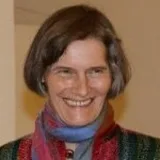

Dear friends of Scholé, most of you have probably read one or other of the magazine articles
in Profil or News in which LAIS, colearning, home education and unschooling were once again lumped together and labelled with the warning sign “Hands off: sects! Antisemitism! Esotericism! People who reject the state!” The editors themselves heed this warning in exemplary fashion: they don’t waste time on research; the opinion of the sect counselling centre is enough for them.
I can still remember well the time when Montessori and Waldorf schools were defamed with very similar knock-down arguments. Thirty years ago it took courage to opt for an alternative school suspected of being a sect, where the children supposedly learned nothing sensible but just played around… Many parents did not make this decision voluntarily either, but because they had no other choice when their overly sensitive children simply could not cope with mainstream school. The authorities were, and still are, quite happy for “behaviourally conspicuous” pupils to be taken in by private alternative schools. That is why the state tolerates these schools, even if it does not fund them: highly sensitive children are something you have to be able to afford, aren’t they?
The alternative-school pupils of those days are now adults and, contrary to all the prophets of doom, mostly successful and content in life. Many of them are now parents themselves and ready to go one step further: the number of unschoolers and alternative settings is rising with the number of highly sensitive children whose parents see this not as an “illness” but as a reason for joy. Those responsible for education are evidently less pleased, as they risk losing seamless control over the younger generation. Fortunately, there are always civil servants willing to talk and with empathy, for whom the child’s well-being comes first. They are therefore prepared to cooperate with courageous parents and find tailor-made solutions.
Articles like “Voodoo Pädagogik” (Voodoo pedagogy), however, stab these open-minded officials in the back. They are grist to the mill of the relentless officials who care only about “doing their duty” with no ifs or buts. As a reader, I wonder how such negligent reporting can be justified, given that the same magazines publish alarming articles almost every week about the “education emergency” in Austria: about rising violence in schools, teacher burnout, pupils with serious psychological and health problems, the risk of addiction, disastrous test results, school leavers with no future who can neither do sums nor read with understanding, and so on.
Would it not be the duty of a democratic society finally to try out alternatives? Finally to put the well-being of young people at the centre, and not the preservation of the system? Finally to support educational pioneers who have the courage to embrace something new, professionally and financially, instead of making their lives difficult? Finally to observe self-determined children who learn joyfully on their own initiative systematically, so that schoolchildren too can benefit from the scientific findings gained?
Would it not be the duty of democratic media to engage with civil-society initiatives without prejudice? To research them thoroughly before presenting them to a wider public? And to defend innovative projects against age-old prejudices? Would it not be the task of young journalists to take the side of children and young people and stand up for the right to educational freedom, instead of calling for even more surveillance and control?!
I ask you to spread these questions among the people you know. In an alarming number of people I observe a kind of conditioned reflex to condemn, without looking, everything the media have pushed into the right-wing or esoteric corner. Please don’t look away – look closely! Don’t let anyone talk you into anything, positive or negative! Demand facts instead of unproven opinions! Give young initiatives a chance to overcome teething troubles and develop! But get help wherever you see abuses with your own eyes – whether inside the school system or outside it.
And when judging educational paths, please make sure that the REALITY of one path is not compared with the IDEAL of the other! Wild claims that you can learn to read and write in two days or master the upper-secondary maths curriculum in four weeks have no basis in reality. Incidentally, they are not part of the LAIS philosophy; they appeared for a short time on a single website and disappeared from there again quickly, for good reason. Our statute books, on the other hand, still contain the absurd provision that a child registered for home education who cannot yet read with understanding at the annual exam at the age of 7 or 8 may never learn freely again: it must now go to school, where 25 % of its classmates still cannot do so at 14 or 15…
I wish you lovely, carefree summer days, Alexandra
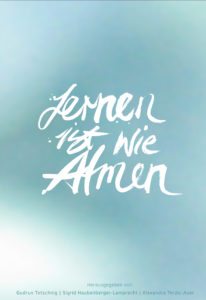
Book tip – “Lernen ist wie Atmen” (Learning is like breathing)
Together with two unschooling mothers, Gudrun Totschnig and Sigrid Haubenberger, we published it ourselves.
We all feel that the time is ripe for this many-voiced account of how unschooling can be lived in practice. Let the reading sample inspire you, or order your own copy on the GAIA marketplace, with a 10 % discount for members. The book is in German.
Notes on content provided by authors
Comments
Loading comments …
Become a member to read and write comments. GAIA members read and write comments in the members' portal.
Become a member Already a member? Read the comments in the portal →