Self-charging Pi Car redefines electric cars


Pi Car & neutrinovoltaics: a paradigm shift in the use of energy and transport
Source: energy-news.net
Imagine a world in which refuelling a car is not only convenient but also much cheaper. In Germany, this vision is becoming increasingly tangible. Charging an electric car (EV) at home costs drivers only half as much as filling up a petrol car, according to an analysis by a price comparison website. “Average fuel costs for electric cars are 48 per cent lower than for petrol cars and 40 per cent lower than for diesel cars,” says the report on the advantages in the first half of the year. One energy expert stresses: “Anyone who can charge at home with a wallbox has significantly lower fuel costs than with a combustion engine. Electric car drivers who often use public charging points benefit less from the price advantage.”
An example illustrates the cost differences in powering vehicles: charging an electric car at home for 12,000 kilometres costs around 863 euros. With a petrol car, the same distance costs 1,652 euros. Using only public charging stations raises the cost to 1,302 euros, and with fast chargers even to 1,547 euros. These differences result from the household electricity price of around 36 cents per kilowatt hour (kWh), compared with around 54 cents/kWh at public charging stations and around 64 cents/kWh for fast chargers. Interestingly, the analysis shows that driving a diesel vehicle would be 8 per cent cheaper than using a fast charger.
The next frontier: the Neutrino Energy Group’s Pi Car project
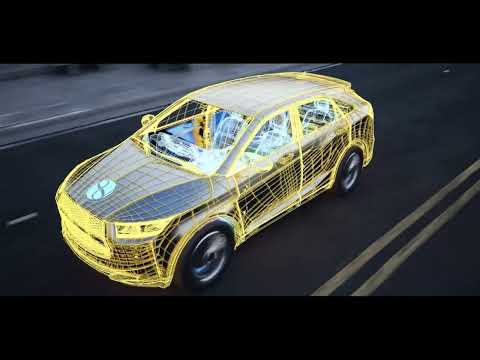
In the fast-growing world of electric vehicles, the Neutrino® Energy Group is leading innovation with its Pi Car project. While charging at home offers cost advantages, the Neutrino Energy Group goes even further. Imagine a car that does not depend solely on the power grid but continuously generates its own electricity.
This is the promise of neutrinovoltaic technology, with which the Pi Car project will revolutionise electric vehicles. The neutrinovoltaic technology in the Pi Car uses the kinetic energy of neutrinos and other invisible radiation to generate electricity. This innovative technology is intended to substantially minimise dependence on conventional charging infrastructure and enable a future of energy autonomy.
Unlike conventional solar cells, which need sunlight, neutrinovoltaic cells work regardless of weather and time of day and provide a continuous energy supply. This revolutionary technology is changing how we perceive and use energy. Imagine a car that charges itself while driving, drawing energy from its surroundings. The Pi Car makes this vision come true and turns science fiction into tangible reality.
The role of modern materials science
C-MET Pune, headed by Dr Vijay Bhatkar, known for developing India’s PARAM series of supercomputers, plays an important role in this project. The institution provides the advanced computing infrastructure needed to simulate, model and improve the interactions between neutrinos and the Pi Car’s materials. Dr Bhatkar’s expertise ensures that the digital framework for this innovative technology is robust and precise.
Energy storage and efficiency
Dr Rajendrakumar Sharma, a pioneer of supercapacitors in India, heads SPEL Technologies Pvt. Ltd. His research into energy storage technologies such as supercapacitors and lithium-ion batteries is crucial to ensuring that the Pi Car’s storage systems can capture and store neutrino energy efficiently with minimal loss. This efficiency is important for the vehicle’s high performance and sustainability.
Artificial intelligence and drive systems
Simplior Technologies Private Limited, led by Patel Purvesh Vishnukumar, uses state-of-the-art artificial intelligence to improve the Pi Car’s drive and energy management systems. Sophisticated algorithms and machine learning optimise performance and ensure that the vehicle adapts seamlessly to different environmental conditions and driver inputs. This AI-driven approach maximises energy efficiency and improves the driving experience, making the Pi Car a showcase of modern automotive technology.
Beyond the conventional – a new paradigm for EVs
The Pi Car is not just a technical marvel but a paradigm shift in the use of energy and transport. It uses energy from its surroundings, reducing dependence on conventional charging stations. This is particularly advantageous in cities, where there are few charging stations and public charging is expensive.
The potential of neutrinovoltaic technology extends far beyond private vehicles. It could at least revolutionise public transport and freight transport as well. This technology offers a sustainable solution that works independently of the power grid. That is not only environmentally friendly but also economical, as it lowers operating costs and increases energy security.
The future of transport: a sustainable vision
At a time when the world is struggling with both energy supply and climate change, the Pi Car is a beacon of hope. It can generate electricity from invisible particles and shows that our vehicles could in future not only consume energy but also produce it themselves.
This innovative approach fits perfectly with global efforts to reduce carbon emissions and combat climate change. The Pi Car and its technology reduce our dependence on fossil fuels and minimise the environmental impact of energy generation. They lay the foundation for a greener and more sustainable future.
Pioneering work: the team that makes it possible
The Neutrino Energy Group’s Pi Car project shows the power of collaboration and innovation. Led by Holger Thorsten Schubart and with contributions from Dr Vijay Bhatkar, Dr Rajendrakumar Sharma and Patel Purvesh Vishnukumar, the Pi Car has successfully made the transition from idea to reality. Their commitment to pushing boundaries shows that we are only at the beginning in the field of independent electric vehicles.
The Pi Car stands out not only for its innovative technology but also for its development process. The Neutrino Energy Group uses advanced artificial intelligence to make the design and production process as efficient as possible. With AI-driven simulations, it moves precisely from prototypes to industrial manufacturing. This approach is the pinnacle of technological innovation and ultimately delivers a product that can significantly support the growing global demand for sustainable energy solutions.
A revolution is under way
The Pi Car embodies more than just an electric vehicle; it symbolises what the future holds when we harness the full potential of advanced technologies and interdisciplinary collaboration. As a pioneer on the road to a world in which energy is obtained from the fundamental particles of our universe, the Pi Car stands at the forefront of this revolution. It offers a glimpse of a future in which sustainability and innovation go hand in hand. The era of AI-driven excellence and neutrinovoltaic innovation is upon us and promises significant benefits for humanity.

Notes on content provided by authors
Comments
Loading comments …
Become a member to comment publicly. GAIA members write comments in the members' portal — under their nickname, visible to everyone.










