Autonomous, fuel-free power generators: the Neutrino® Power Cube is coming


The global confrontation between Russia and the West will lead to a tectonic shift in the balance of power in the EU.
Even if it is currently painful and expensive for the EU to find an alternative to gas and, in part, oil supplies from Russia, the strategic global trend of breaking away from fossil fuels will sooner or later lead to a positive result.
It is not only Russian society that must realise that the days when a state budget lived on tax revenue from exporting oil and gas will be over in the medium term. Redirecting oil and gas to foreign markets will not help either. It is likely that the energy balance in countries such as China and India will also shift towards accelerated introduction of alternative energy – a process that is already in full swing.
Of course, one could argue that the world cannot do without Russian oil and gas and that winter will put everyone (and everything) in their place. But we should be talking not about short-term but about strategic processes, because global changes in the energy sector will take years, probably even several decades. The development strategy should therefore also be guided by these clear trends. In addition, the dynamics of climate change and the processes that go with it, such as thawing permafrost, extreme temperature anomalies, droughts and floods, which have been observed regularly in recent years, must not be ignored.
State capacities are largely determined by the level of development of civilian industry. Here Russia does not compete with the industrialised countries. Nevertheless, a trend towards decentralised power generation systems is emerging, and it is becoming more clearly visible from year to year.
In some EU countries almost half of all new houses are already being fitted with solar cells on their roofs. The particular weather conditions in Russia, for example, make this approach unprofitable. Only in some regions does it make economic sense to build solar power plants and wind turbines.
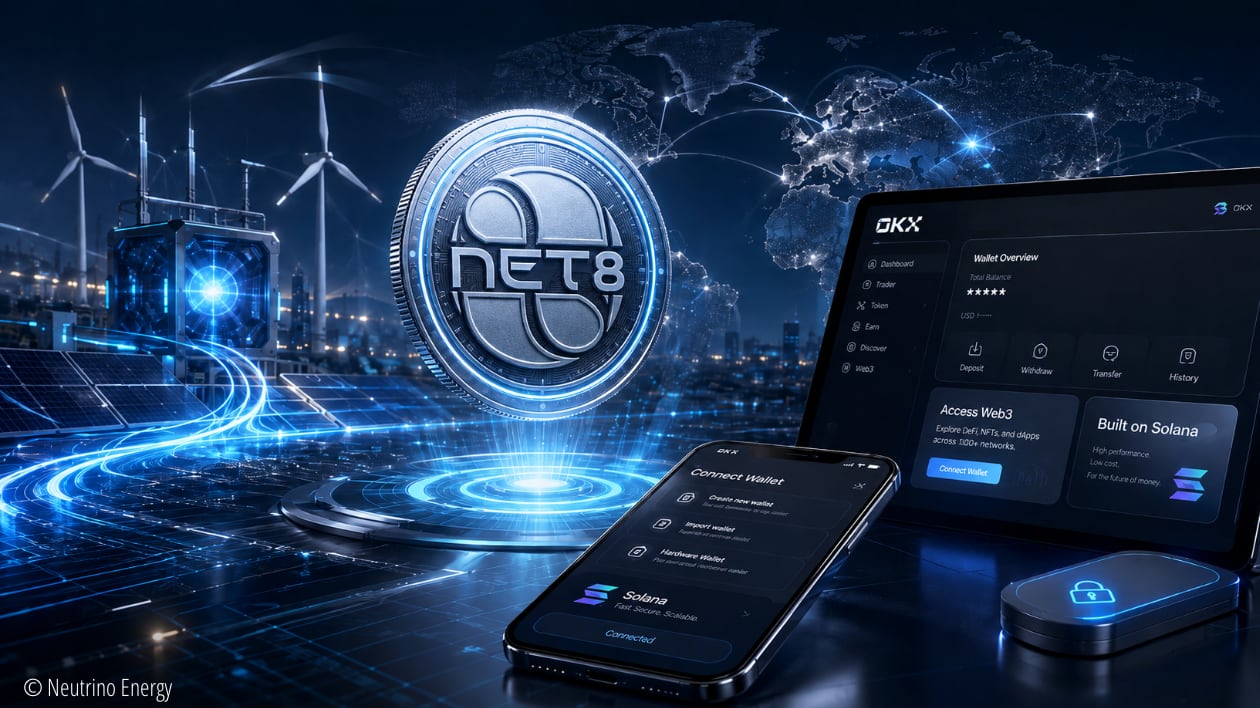
Precisely this situation could change when the Neutrino® Power Cubes come onto the market. They use a fundamentally new technology for generating electricity, developed by an international team of scientists led by the mathematician and entrepreneur Holger Thorsten Schubart.
How is this energy made usable?
The first commercial deliveries of these autonomous power sources are planned for 2023. They are based on a licence acquired by a Swiss technology holding company. A Russian company has also already received a similar licence. Work on building up industrial production is continuing under the leadership of JV Progressus Neutrino, and negotiations are already taking place with other global manufacturers.
It should be noted that the Russian partners appreciate the market potential for such equipment, which is why the decision was made to organise production in Russia.
Why can Neutrino® Power Cubes generate electricity anywhere?
That’s right: unlike solar panels and wind turbines, Neutrino® Power Cubes generate electricity anywhere.
Neutrino Power Cubes consist of a number of power generation modules connected in parallel and/or in series, as well as an electronic control system. The number of modules depends on the customer’s requirements.
In the first production phase, the manufacture of Neutrino® Power Cubes with a net capacity of 5–10 kWh is planned. The Neutrino Power Cube will have sockets for 220 V and 380 V AC devices as well as a socket for electronic DC devices.
The unique neutrinovoltaic technology is based on the Neutrino Energy Group’s development of an ultra-stable multilayer nanomaterial containing alternating layers of graphene and silicon, applied to a metal foil.
The thermal Brownian motion of the graphene atoms, together with the action of particles in the surrounding radiation fields, including neutrinos with mass, generates “graphene” waves that are visible under a high-resolution microscope.
The results published in the journal Physical Review E show that graphene vibrates and bends in a way that allows it to harvest energy. When the frequencies of the vibrations of the graphene atoms caused by thermal Brownian motion coincide with the external action of neutrinos on the nucleus of the graphene atoms, as well as other surrounding fields with radiation of the invisible spectrum, the atomic vibrations of the graphene atoms go into resonance, which increases the yield of graphene electrons many times over. By choosing the alloying elements and using pure graphene, the electron clouds are deflected in one direction.
Neutrinovoltaics does not depend on external factors such as weather conditions
This makes it possible to classify it as a source of guaranteed, baseload-capable electricity supply. The use of widely available and inexpensive materials in the manufacture of Neutrino® Power Cubes and their very low operating costs also allow them to compete with other forms of alternative energy.
The Neutrino Energy Group predicts that the resulting properties of neutrinovoltaic power sources will make it possible to reform the energy sector in line with the ecological development vector of every country.
In this context, promising neutrinovoltaic technology today undoubtedly sets a clear direction for energy development in the coming decades.
The Neutrino Energy Group
The Neutrino Energy Group is a German-American research group. Its aim is to find ways to harness the power of the invisible radiation spectrum. As fossil fuels are limited and climate change requires the development of alternative and CO2-neutral energy sources, this research group is dedicated to an urgent problem. It has succeeded in creating a dense substance that can interact in a specific way with neutrinos and other invisible radiation. This unique substance is used to build the first neutrino photovoltaic cells for power generation. Vapour-deposited layers of silicon and doped graphene are applied to the carrier layer to make the end product. The thickness of these layers is in the nanometre range. When neutrinos and other invisible radiation strike this substance, they generate both horizontal and vertical impulses. It is crucial that the doped materials have the right layer thickness. At the optimum layer thickness, the atomic vibrations caused by the impulses are brought into resonance. As a result, an electric current can be detected in the substrate material. The hypothesis states that the amount of energy that can be harvested depends on the distance travelled in the process. With this approach it will soon be possible to charge electrical devices anywhere in the world without needing a socket or a cable. Simply “collecting” energy from the environment is a viable option. As a result, humanity will have access to an endless supply of clean energy, which will help to slow or halt global warming.
The Neutrino® Energy Group works with a worldwide team of scientists and various international research centres. They research applications for converting invisible radiation spectra of the sun, including neutrinos – high-energy particles that reach the Earth incessantly and can be converted into electrical energy.
The image rights lie with the author of the press release.
Notes on content provided by authors
Comments
Loading comments …
Become a member to comment publicly. GAIA members write comments in the members' portal — under their nickname, visible to everyone.