Creative Society – a world for young and old
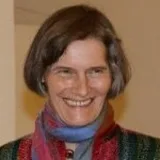

As part of the worldwide CREATIVE SOCIETY initiative, the participants
in the project held a live conversation with the therapist and education activist Alexandra Terzic-Auer from Vienna. The title, “The future belongs to the children”, reveals that working with children, young people and families is particularly close to Alexandra’s heart and that she is committed to education and the healthy development of children.

Katja: Alexandra, how do you imagine a society in which you yourself, every child and every adult on Earth would feel free, safe and well?
Alexandra: That is, of course, the society of my dreams. The difficult question is where we begin to create this society, and I think it is fairly logical to begin with the children. After all, the drilling for an unfree society also begins with the children, and very, very early on. Already when a child is taken out of its mother’s womb at a time it did not choose for itself, when it is put into a crèche even though it wants to stay with its mother, and when it enters an education system in which competition, not cooperation, is what counts. The earlier this begins, the more natural it seems to a person and the harder it is for them to imagine anything else, because they consider it normal. And anyone who suggests something different seems mad to such a standardised person, and that is quite difficult. That is why it is extremely important to begin with the children.
On the other hand, it is a “chicken-and-egg problem” – it depends on adults recognising this and being able to let children grow up in a different way. For anyone who has come out of this education system without rebelling against it will naturally pass it on as they learned it themselves and will feel it to be completely natural and self-evident. That is why there are not yet very many such people, but their number is growing. They dream of a different way for children to grow up, and not only that – some of them are putting it into practice.
Nika: At the conference “Creative Society. Together we can do it.” in 2020, a therapist who spoke there described the problem that she cannot really help her patients because she cannot fight the conditions into which people have been pushed. She speaks of learned helplessness and is convinced that the experience of self-efficacy is the solution to psychological problems. How do you see this from your professional experience?
Alexandra: Yes, I agree with her one hundred per cent. It is not as if the education system were run by evil people. On the contrary, there are parents of good will, teachers of good will, and the children come to school wanting to learn something. When they start in the first year, they are still full of enthusiasm. This enthusiasm does not last very long. And many teachers who took up this profession with enthusiasm burn out within a short time because the conditions are so terrible – and because under these conditions it is not even possible to bring out the talents a good teacher may have; instead, they suffocate in all kinds of regulations and restrictions. They face a system that makes it impossible to respond to the child – even though this is always talked about, in fact the circumstances make it quite impossible. Where there is talk of unfolding potential, individualisation and so on, I always have to smile sadly and think: “Yes, it all sounds wonderful, but how are we supposed to do it?” Twenty-five children of the same age, whose stages of development are actually incomparable and becoming ever more so, are supposed to be taught by one person in one particular way. And the German word for teaching, “unterrichten”, already says exactly what happens: it contains “hinuntergerichtet” – directed downwards. So the children are not raised up, which is what I would argue for, but “directed downwards”.
 And that is what is common practice today, and so children are not raised to empower themselves, but to be subjects of a particular system. Although the child is always the topic, in truth it is about preserving the existing system. The system, of course, also changes over time. And to the extent that it changes, no more soldiers or assembly-line workers are produced; instead, such a school system produces consumers and, more recently, creative people too – but within the narrow confines of what our economy calls creative. And these changes are already taking place.
Katja: Today we live in a consumer society in which the negative and selfish side of a person is stimulated. Why can we not simply create conditions in which the other, positive side is encouraged and developed in children from an early age? And everything to do with violence, aggression and manipulation through fear in the media and in books would be stopped. This is what the 5th foundation of the Creative Society is about, which defines the creative value system. It means fostering moral and ethical values in every person and in society in general.
Alexandra, what is your opinion of this foundation? Do you think it is necessary to ban the propagation of violence and aggression in society?
Alexandra: Yes, I think that is absolutely necessary. But I believe that, in order to tackle it effectively, it is necessary to recognise structural violence as such, too. Otherwise it remains a squabble. Where does violence begin? What is violence and what is not, what may children see – that is an incredibly tedious business. What really matters is respect. A person who is shown respect from an early age will respect others, and in the system we are in at present, that is simply impossible. The conditions simply do not allow it.
Katja: Yes, violence is a fundamental aspect, and then there is the aspect of the content that is taught. What is the aim of education today at all? We would like to come back to one of the speakers at the conference. As an education officer, he says that schools today mainly promote cognitive abilities, while humanity and values are lost in the process.
Nika: This violence in school education that you are talking about has to do with power and dominance. That is exactly what is increasingly propagated in our society too – what is supposed to dominate in a person.
And truly to respect that everyone is here to go their own way, that we accompany children rather than bring them up, and learn to respect their free choice. As adults, we should not try to make children adapt to us, but recognise where their potential lies and encourage them to develop it. Of course, violence can take different forms; it is already applied subliminally, and what we were taught to regard as normal, what we perceive as such, can already contain violence. I understand what you mean.
Alexandra: And surely another important point is that we stop seeing children as a problem all the time, and that we can see them as a gift again. Or perhaps not “again” – I don’t know whether “again” is the right word. It was probably only ever in exceptional situations that children were regarded as a gift. But that would be so important. And I believe that under such pleasant conditions – pleasant in terms of the external circumstances – in which we live, or which we would be able to create, this could be lived.
Nika: Yes, the value of every human being – that is also the foundation on which all eight foundations are based. The eight foundations are what people around the world have expressed; they are based on an extensive study in which millions of people were surveyed over the last 9 years. They all want the same dignified living conditions and the implementation of fundamental rights in society.

Alexandra: That also means giving up this claim of ownership. In principle, even the expression “my child” is questionable, because the child does not belong to its parents but is entrusted to them for a certain time and actually belongs to itself from the very beginning. Becoming aware of this and acting accordingly would make a great many problems disappear as if by themselves.
Katja: Yes, exactly – this calls for inner work: recognising one’s own selfishness and observing oneself. Every parent should do this in order to build a relationship with the child that allows children to grow up as independent people.
Nika: We should create living conditions, especially for the little people, in which they enjoy special protection. Humanity should be modelled for them in particular from the very beginning, in a society of humanity. Those already involved in the project firmly believe that this change is possible in all spheres of our lives if most people consciously decide in favour of it and begin to focus their attention on this goal.
Alexandra: Exactly. Quite right. This is simply something from which you cannot cut out a single segment; it really encompasses every segment of this society. It encompasses the economy, agriculture, education, science – everything; there is nothing that is excluded. And what it would bring about would be a 180-degree turn. Because at the moment our society is, in the broadest sense, geared to exploitation: exploitation of the Earth, exploitation of people. If that is transformed into a creative society, it really is a 180-degree turn.
What I observe is that more and more children are no longer putting up with the old system. That is, more and more highly sensitive children are being born, and at first this shows up as something negative, namely that about a quarter of children suffer from moderate to severe psychological problems. But these are precisely the children who were actually born for a new time and who can no longer cope with the behaviours and the way of growing up that were normal in earlier generations. Much has to change, because it simply cannot go on like this. I work a lot with children, and what I see is that the spiritual is very strongly present in these children, for example.
Nika: Alexandra, you have studied various school concepts, and we wanted to ask you: what could a school concept look like in the Creative Society?
Alexandra: My idea would be free choice of education. For this, one could use the possibilities of the internet that are available today. At the same time, every child should still be entitled to an education allowance. I am very much in favour of saying not “child” but “person”, because it does not stop at a certain age – it should be every person’s right. Places of learning should emerge where people of different ages can come together and live out their potential. Presumably, at least for a transitional period, it will still be necessary to keep the existing schools, as far as they still exist and are accepted. But also the many initiatives that already exist: they should not be suppressed, as has happened so far, driven into a corner, starved financially and swamped with all kinds of regulations and ordinances so that they can hardly survive. Instead, this development should really be encouraged, people should learn from it, and the experience gained should be collected and made available to others.
Nika: Do you have any other ideas on how the idea of the Creative Society could be spread further?
Alexandra: Well, I am completely convinced that all the people I deal with – both those who let their children grow up completely freely and those who home-school or work at new places of learning – will all be very enthusiastic, because it is exactly in line with what the Creative Society is putting into practice.
Nika: That is so important because the initiative is at the first stage – informing people – and this is extremely important and indispensable. Only when everyone knows about it can people consciously decide in favour of it. Anyone who has recognised the vital necessity of this change and would like to speak out in favour of the Creative Society can cast their vote on the website allatraunites.com. In this way an electorate forms within a country, and once a majority of voters has been reached, the project can move on to the second stage. In the second step, the voters’ platform can be founded, through which the representatives of a country are formally asked to implement the 8 foundations of the Creative Society.
 Anyone can take part in such a live conversation as part of the Creative Society project or join the project via allatraunites.com.
We would like to thank Alexandra very warmly for this important contribution on how we treat children and to the Creative Society initiative, which covers all areas of life and envisages a society for the true well-being of everyone!
The International Social Movement “ALLATRA” describes itself as a format of interaction outside politics and religion. This global movement, which unites millions of people from more than 180 countries, is open to all people of good will, regardless of place of residence, nationality, social status, religion or political affiliation. The activity of this voluntary international movement is aimed at reviving spiritual and moral values in the world community and at establishing a peaceful dialogue on aspects of society such as cultural, social, spiritual and moral conditions.
Notes on content provided by authors
Comments
Loading comments …
Become a member to comment publicly. GAIA members write comments in the members' portal — under their nickname, visible to everyone.