Neutrinovoltaics confirms Tesla's idea of fuel-free "free energy"


The whole history of humanity is a succession of wars and armed conflicts.
Any state can be sent back to the Stone Age by destroying its energy infrastructure. That is why the task of creating a decentralised power generation system and gradually moving from centralised to autonomous power supply is coming to the fore in an increasingly international environment.
Existing power generation technologies are not up to this task because they are uneconomic from the outset. Autonomous power supply systems must work reliably, require no constant maintenance and be cheaper than a centralised power supply.
Since the time of the brilliant Serbian scientist Nikola Tesla, researchers have been trying to find a way to harness so-called “free energy”. Wikipedia defines “free energy” as a thermodynamic state function, just like internal energy, enthalpy and entropy. Free energy is the part of the energy according to the first law that is available for doing thermodynamic work at constant temperature, i.e. work mediated by thermal energy.
If you look at publications and videos from various sources, you will immediately find many reports on BTGs (fuelless generators). The term BTG refers to a device that generates electricity without resources being needed to turn its shaft. The operation of every generator is based on the principle of generating electricity through the directed movement of charged particles. The reason why such a project cannot be fully realised is the law of conservation of energy: to obtain one kind of energy, another kind of energy has to be expended.
Several BTG methods are known today: the Tesla generator, the Hendershot generator, the Tariel Kapanadze generator, the Chmielewski generator, the John Searle generator, etc. From a practical point of view, the most interesting BTGs are those that have no rotating parts, since it is hard to imagine placing a rotating motor in the house that would still need constant maintenance.
Let us take a Tesla generator. One variant of such a generator is described in an article by Victor Korotun. Aluminium foil measuring 900 × 300 mm is fixed on an insulating surface, e.g. dry plywood or a plastic sheet. The foil is connected by a wire to the capacitor (see figure 1).
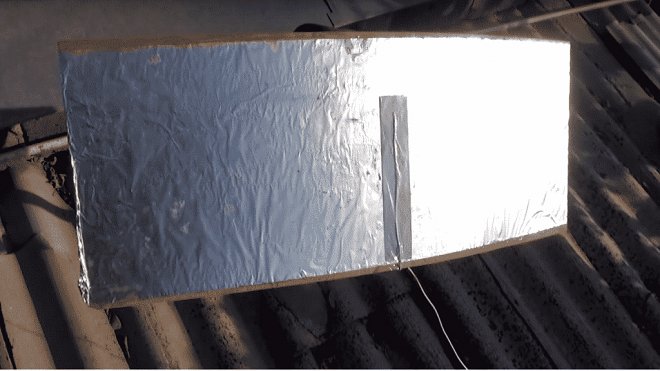
Figure 1
The second lead of the capacitor plate is earthed (see fig. 2).
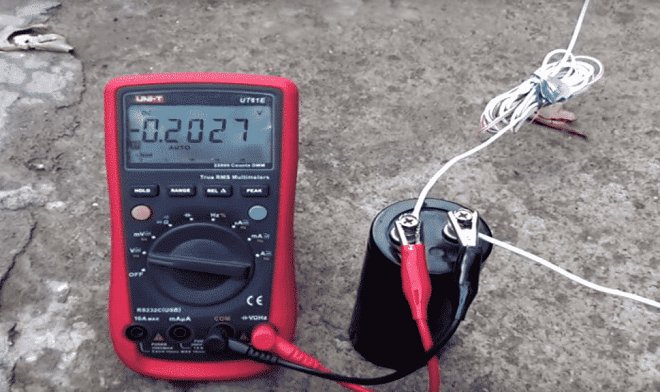
Figure 2
A team of scientists of the Neutrino Energy Group led by the mathematician Holger Thorsten Schubart, who holds a doctorate, succeeded in applying a multilayer material of alternating layers of graphene and doped silicon to one side of the aluminium foil in order to put the idea of such a BTG into practice. The optimum composition of this material consists of 12 alternating layers of graphene and silicon with an overall ratio of 75/25%. A4-size aluminium foil coated on one side in multiple layers generates an electric current of 1.5 V and 2 A; after coating, the coated side of the foil becomes the positive pole and the uncoated side the negative pole. The coating is applied under vacuum conditions and in the absence of oxygen.
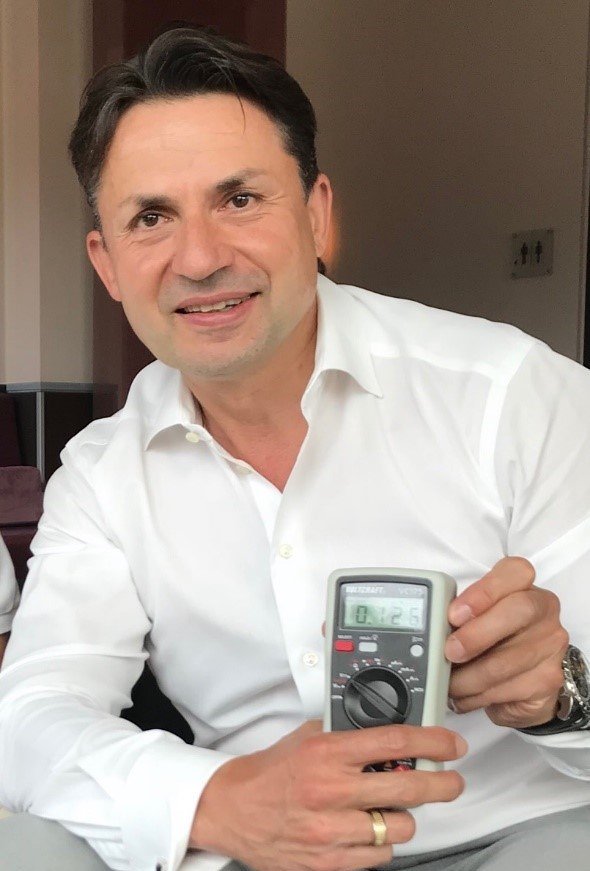
Holger Thorsten Schubart
Whereas with the Tesla BTG a large increase in the receiver area (aluminium foil) was needed to increase the power generated, with the Neutrino Energy Group’s receiver the receiver plates could be stacked like a stack of writing paper, i.e. connected in series. Connecting the plates in series increases the output voltage of the compressed stack, so that the desired voltage is reached by varying the number of plates. The compressed stack of receiver plates is housed in a hermetically sealed casing to prevent oxygen from entering. Several such modules were connected in parallel to obtain the required output current.
At present, licensed industrial production of Neutrino Power Cubes with a net capacity of 5–10 kW⋅h is in the preparatory phase in Switzerland. These power supplies will have an electronic control system that can supply devices with 220 and 380 volt alternating current as well as connections for direct current devices. Commercial production is expected to start at the end of 2023.
On the basis of research, Holger Thorsten Schubart concluded that electricity is generated by the thermal Brownian motion of the graphene atoms and the kinetic energy of particles in the surrounding radiation fields, above all neutrinos. He explains the structural solution of the multilayer coating on the metal foil as follows: “The multilayer arrangement of alternating layers of graphene and doped silicon causes the forces between the graphene electrons to get ‘out of balance’. The overall effect is what physicists call ‘skew scattering’, in which clouds of electrons deflect their motion in the same direction, which is called direct current. Also crucial is the use of pure graphene, containing practically no impurities, and the technology of doping and depositing graphene and silicon layers, which are deposited in a vacuum and without access to oxygen.”
The discovery of the two-dimensional form of carbon, graphene, and applied research into its properties will make it possible to create a fundamentally new configuration of decentralised power generation. The first steps in this direction were taken confidently and convincingly by the Neutrino Energy Group, which announced to the world the creation of a unique autonomous direct current source that can find its widest application in many industries, from power generation to the automotive industry.
The Neutrino Energy Group
The Neutrino Energy Group is a German-American research group. Its aim is to find ways to harness the power of the invisible radiation spectrum. As fossil fuels are limited and climate change requires the development of alternative and CO2-neutral energy sources, this research group is dedicated to an urgent problem. It has succeeded in creating a dense substance that can interact in a specific way with neutrinos and other invisible radiation. This unique substance is used to build the first neutrino photovoltaic cells for power generation. Vapour-deposited layers of silicon and doped graphene are applied to the carrier layer to make the end product. The thickness of these layers is in the nanometre range. When neutrinos and other invisible radiation strike this substance, they generate both horizontal and vertical impulses. It is crucial that the doped materials have the right layer thickness. At the optimum layer thickness, the atomic vibrations caused by the impulses are brought into resonance. As a result, an electric current can be detected in the substrate material. The hypothesis states that the amount of energy that can be harvested depends on the distance travelled in the process. With this approach it will soon be possible to charge electrical devices anywhere in the world without needing a socket or a cable. Simply “collecting” energy from the environment is a viable option. As a result, humanity will have access to an endless supply of clean energy, which will help to slow or halt global warming.
The Neutrino® Energy Group works with a worldwide team of scientists and various international research centres. They research applications for converting invisible radiation spectra of the sun, including neutrinos – high-energy particles that reach the Earth incessantly and can be converted into electrical energy.
The image rights lie with the author of the press release.
Notes on content provided by authors
Comments
Loading comments …
Become a member to comment publicly. GAIA members write comments in the members' portal — under their nickname, visible to everyone.










