New energy technologies free us from dependence on fossil fuels

What distinguishes the new technology of photovoltaic neutrino power generation
is that very different types of radiation, such as electromagnetic, ionising and neutron radiation, can be used to generate electricity.
In today’s world there is an urgent need to create a source of electrical energy. On the one hand, it must be able to replace the existing power generation system based on burning fossil fuels in the near future; on the other hand, it must bring the power source closer to the consumer. In this way, electrical energy losses in the grid are appropriately reduced and the costs of building the grid are lowered.
Alternative energy sources such as solar and wind energy have obvious shortcomings that severely limit their widespread use and, for example, offer hardly any economic prospects for most of China.
The widespread use of natural gas in the transition period does produce fewer emissions than coal, but it also results in greenhouse gas emissions into the atmosphere. In addition, many countries are trying to promote the use of electric vehicles, which also pollute the environment when they consume electricity that is not generated in an environmentally friendly way.
Many of the world’s largest companies have invested heavily in the search for promising power generation technologies and have recruited talented scientists to work on them. The development of the Neutrino Energy Group is a success story in this respect. The Berlin-based company has developed rapidly over the last 2–3 years. Laboratory conditions were created there for neutrinovoltaic technology, in which electricity is generated by the effect of other electric fields such as the surrounding radiation field (including the cosmic neutrino flux). Ultimately, the development culminated in the start of pilot production at two sites in Germany, thanks above all to the originality and the demand for market research and development.
The originality of the technical process lies in the fact that, for the first time since Nikola Tesla, a technical process for obtaining electricity through the effect of a projection field has been developed. The technology was made possible by creating several layers of nanomaterials, applied to one side of a metal foil, which can convert different kinds of radiation into electricity. The nanomaterials consist of alternating layers of graphene and silicon with added alloying elements (patent EP3265850A1). The vibrations of the graphene atoms under the influence of Brownian motion are amplified by the external influence of the surrounding radiation field, which leads to a vibrational resonance of the graphene atoms that is released in the form of direct current. The atomic vibrations at resonance allow an increased recoil of electrons when they come into contact with doped silicon. Graphene is a 2D material with the properties of a 3D material. Graphene is precisely the indicator that converts the energy of the radiation field, including the neutrino flux, into electricity.
The nanomaterials with the required properties were developed by scientists of the Neutrino Energy Group led by Holger Thorsten Schubart, the project’s scientific director. One of the undisputed strengths of the work of Holger Thorsten Schubart and his team is that they have succeeded in combining the advanced theoretical knowledge of modern science in creating nanomaterials with specific properties with practical human needs.
The possibility of obtaining electrical energy through the action of different types of radiation has been repeatedly confirmed by the work of several scientists, including at ETH Zurich under Professor Vanessa Wood. In an article in the journal “Nature”, Prof. Vanessa Wood and her colleagues explain which processes lead to atomic vibrations in nanoscale materials and how this knowledge can be used to develop nanomaterials specifically for various applications. The article states that when materials smaller than 10–20 nanometres (5,000 times thinner than a human hair) are produced, the vibrations in the outer atomic layer on the surface of the nanoparticle are large and play an important role in the behaviour of the material.
The results of the analysis confirm that it is possible to select nanomaterials that can amplify atomic vibrations. This is a very important conclusion that confirms the properties of layered composite coatings on metal substrates at the nanoscale. They form the basis of neutrino photovoltaic technology, which can convert energy from radiation fields into electrical energy. At the same time, it should be noted that the resulting coating material itself has increased the amplitude of the atomic vibrations. The coated side of the substrate is the positive side and the uncoated side the negative side.
What is special about the new technology of neutrino photovoltaics is that very different types of radiation, such as electromagnetic, ionising and neutron radiation, are suitable for generating electricity.
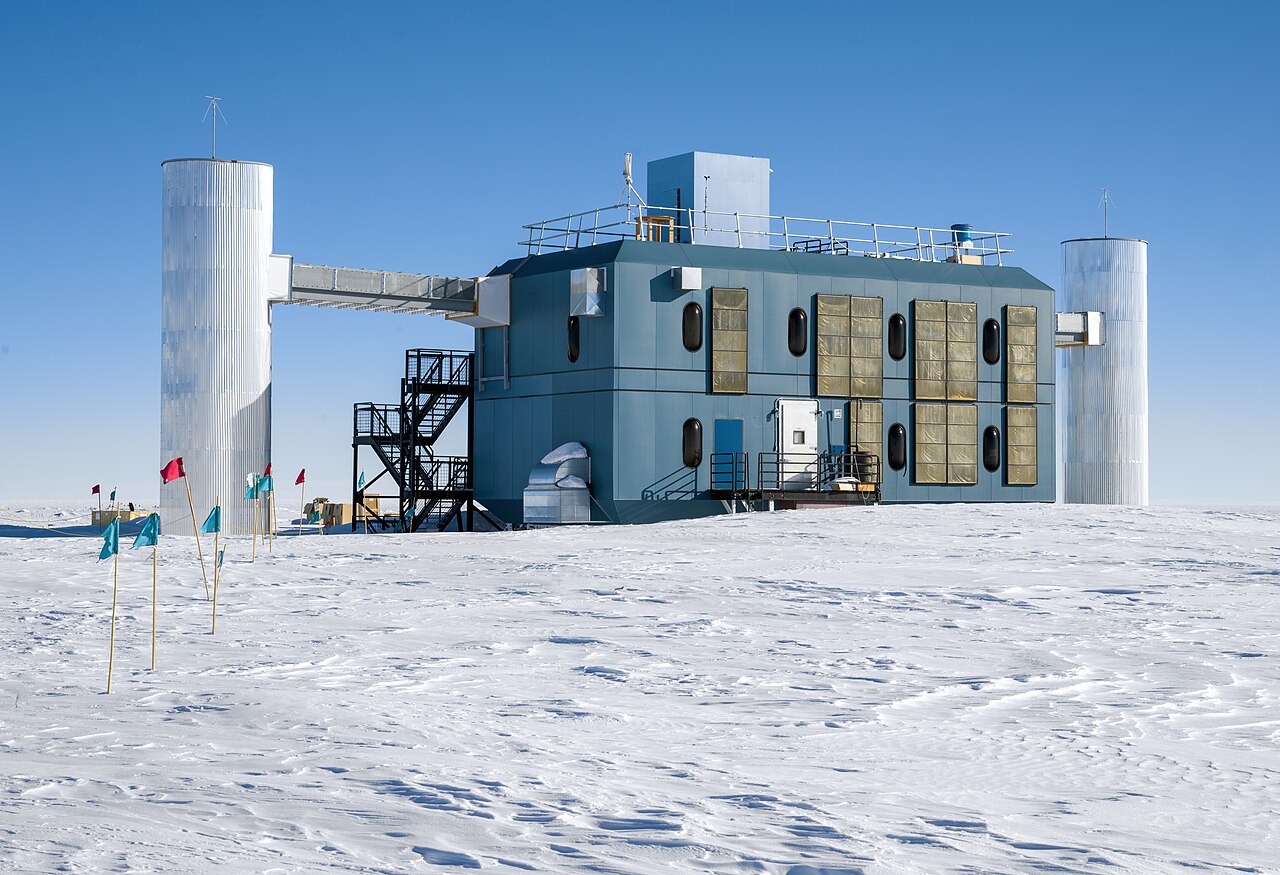
The energy of neutrinos – which penetrate the Earth’s surface with an intensity of 60 billion particles per second per square centimetre – can also be converted into electric current. This conversion does not depend on weather conditions or seasons. It remains stable day and night. How neutrinos affect the nuclei of materials is explained in a paper published by the COHERENT collaboration at Oak Ridge National Laboratory in the USA.
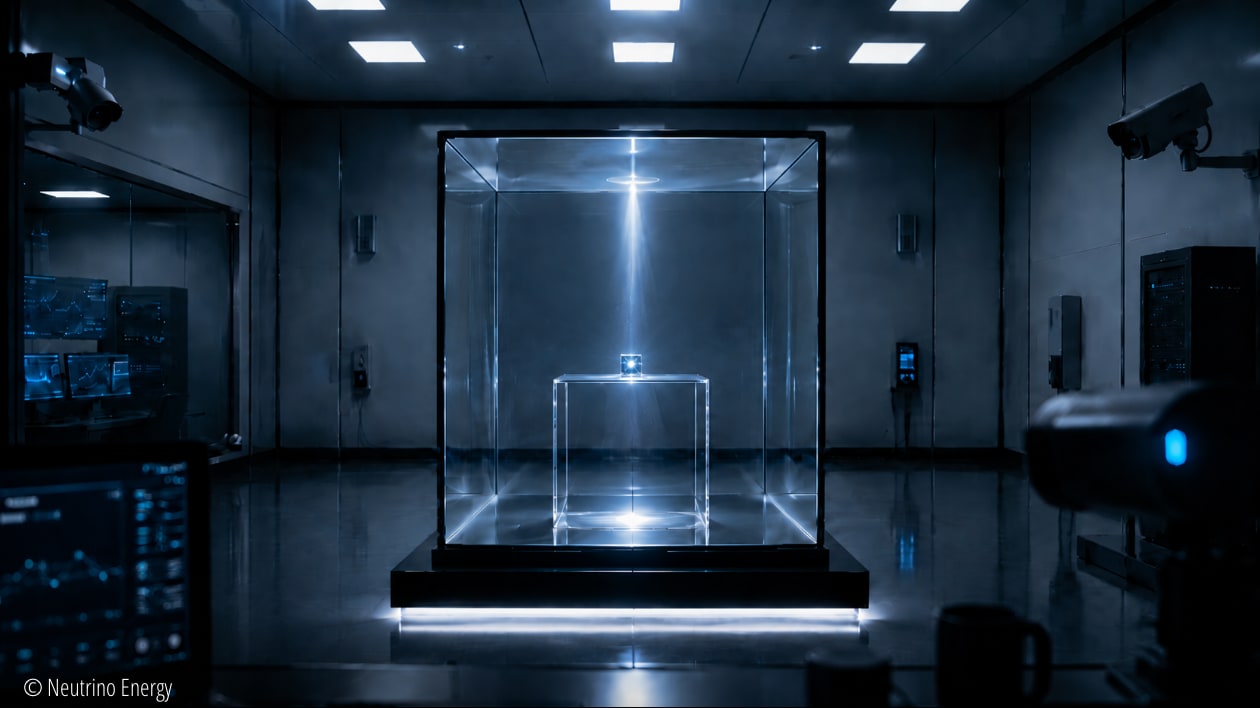
Neutrino® Energy Cube
One of the technologies arising from the discovery of neutrino photovoltaics that would be used in everyday life is power supply by the Neutrino Power Cube. It consists of several layers of metal foils pressed together and covered with a special spray coating, and is able to generate electricity completely independently of the regional grid. This is unlike photovoltaic cells, where only visible light (the visible radiation spectrum) can be converted into energy. The A4-sized foil is covered with a special layer of doped, dense nanoparticles and delivers a stable output of 2.5–3.0 W of electrical energy in the laboratory. The Neutrino® Energy Cube power supply is designed to generate 4.5 to 5.5 kilowatts per hour and is compact in size.
The Neutrino® Energy Cube power supply offers undeniable advantages, because energy can be generated continuously 24 hours a day: the background radiation, i.e. the invisible radiation spectrum, reaches the Earth even in complete darkness.
The technical features of the Neutrino® Energy Cube make it possible to create a decentralised power generation system that avoids the loss of electrical energy in the grid. Electricity is generated where it is consumed directly. By installing the Neutrino® Energy Cube in electric vehicles, for example, it also becomes possible to considerably reduce charging at charging stations or central power supplies.
Given the many possibilities for applying emission-free neutrino photovoltaic technology in practice, we can already say today that it is the first step in the process of the energy transition – and a very important step that determines all processes of economic development in today’s world.

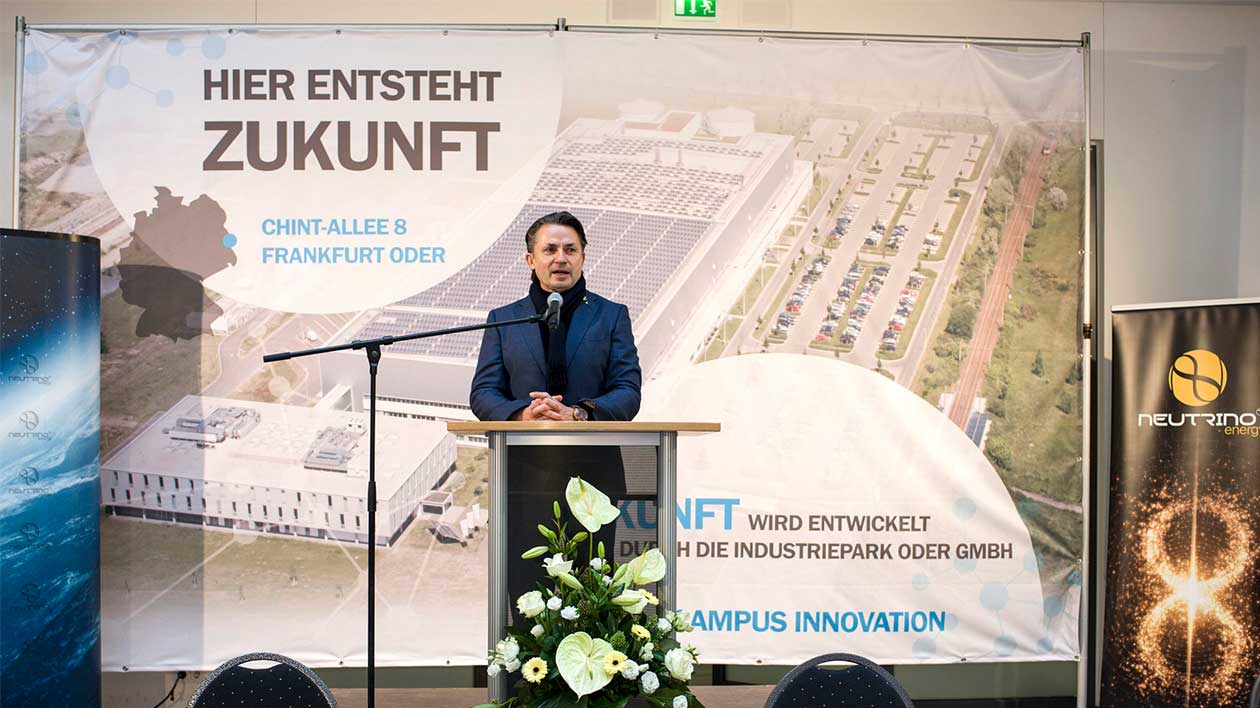
Holger Thorsten Schubart CEO of the Neutrino Energy Group
The Neutrino® Energy Group works with a worldwide team of scientists and various international research centres. They research applications for converting invisible radiation spectra of the sun, including neutrinos – high-energy particles that reach the Earth incessantly and can be converted into electrical energy.
The image rights lie with the author of the press release.
Notes on content provided by authors
Comments
Loading comments …
Become a member to comment publicly. GAIA members write comments in the members' portal — under their nickname, visible to everyone.