The multi-paradigm shift becomes visible, part II: A new image of the human being

The multi-paradigm shift becomes visible – part II: A new image of the human being
Continuing from the first part of my series of articles, I would like to describe below the most important discoveries (in the natural sciences and the humanities) which suggest to us a completely different image of the human being from the one we are used to from materialistic conventional medicine: the “trinity” of body, mind and soul.
This age-old model of thought is found in many cultures around the world and proved its worth over thousands of years, before materialistic conventional medicine focused solely on the body formed from matter and declared mind and soul to be epiphenomena of material substances.
The fragmentation of science into individual disciplines and sub-disciplines has not only hampered communication between experts but also made a holistic understanding impossible. Yet comprehensive understanding is the only way for us humans to act consciously and responsibly. We can see an example of this fragmentation in the field of medicine:
Classical mechanics is applied in surgery (for fractures, but also in vascular and nerve operations) and in emergency medicine. Because the mechanical principles have been known to us from traditional physics for centuries, understanding here is also grounded in causal relationships (causes and effects that can be observed empirically: after the operation, bones are whole again, vessels are open, wounds are closed).
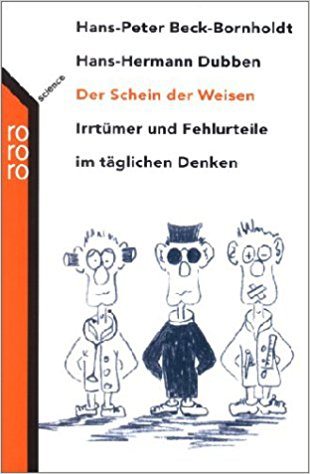
At the level of (bio)chemistry, by contrast, relationships are mostly “explained” by correlations – while studiously overlooking the fact that correlations are neither identical with causality nor prove it, nor can they explain a process in any other way. Correlations, like statistics as a whole, are only descriptive, never explicative (explanatory). The two biophysicists and oncologists Hans-Hermann Dubben and Hans-Peter Beck-Bornholdt describe this very vividly in their three books:
BOOK: Der Schein der Weisen (The appearance of the wise, German)
BOOK: Der Hund, der Eier legt (The dog that lays eggs, German)
The last title deserves an explanation. It stems from the following thought experiment: imagine that three sausages and two eggs are lying on a kitchen table. Now a dog comes into the kitchen, eats two sausages and leaves the kitchen again. Since the percentage of eggs among the things on the kitchen table was 40% before (two out of five) but 67% afterwards (two out of three), one might, “arguing on a statistical basis”, come up with the idea that the dog had laid eggs – after all, the percentage of eggs among the things on the kitchen table has risen. The reason we do not usually draw this conclusion has nothing to do with statistics, but with our everyday knowledge that dogs are more likely to eat sausages than to lay eggs! The authors then immediately show, however, that in the field of cell metabolism (whose causality is still not understood!) exactly such fallacies have actually been committed by medical scientists “arguing on a statistical basis”! Of course, behind these misinterpretations there are also the massive sales interests of the pharmaceutical industry, which dominates precisely the (bio)chemical field of medicine – so that these insights can hardly be taught correctly at universities that depend on money.
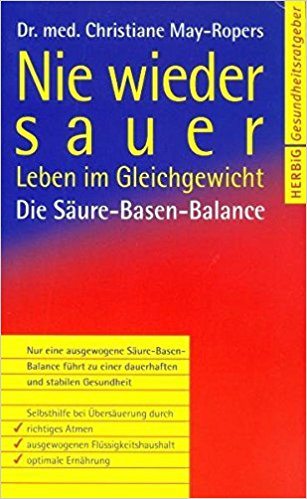
For several decades now, the pH value of the blood (and thus of the human body in general) has been researched from a health perspective. It is extremely sensitive and should always lie between 7.35 and 7.45, i.e. be slightly alkaline. When there is a threat of over-acidification, the body activates all its reserves of acid buffers (from the bones, tooth enamel etc.), which can then lead to deficiencies and “symptoms of disease” in the skeleton or teeth – which are then in turn misinterpreted in those areas as original diseases of those parts of the body. Not only diet, but also the “right” breathing technique can help us maintain this important balance.
In fact, however, the pH value is an electrical phenomenon (the number of hydrogen ions), so that with it we enter the electromagnetic field of medicine. Not only the acid–base balance but also the performance of our heart, which generates a far stronger magnetic field than our brain, can be interpreted electromagnetically (see e.g. HeartMath.org).
Electromagnetic processes also take place in the brain. Through practice (meditation, lucid dreaming etc.) we can not only improve our health but also experience and explore new states of consciousness (e.g. by using so-called binaural beats as an aid to getting started).
WEBSITE: Binaural Beats (German)
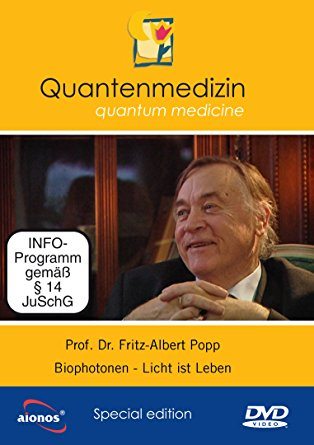
Another field of physics, quantum mechanics, became interesting for medicine through Fritz Albert Popp and his discovery of biophotons (German).
Here the “experimental leeway” is probably still greatest, and the results as a whole are still the least “certain”. Ultimately, every organism is the result of its unique biography, and the observer effect teaches us that – even in the “hard-core science” of physics! – we are dealing with subjects, not objects (an easy-to-understand introduction to “quantum healing” can be found here, for example):
Overall, however, we find that physical development is by no means “predetermined by higher powers”, as classical genetics has repeatedly claimed, especially in the case of the “heritability of diseases”. We know, on the contrary, that even our genetic material itself can be changed (improved!) by our own behaviour, ever since Bruce Lipton achieved the breakthrough in this field with epigenetics.
BOOK: Spontane Evolution – Bruce Lipton (German edition of “Spontaneous Evolution”)
Conclusion
Today’s medical image of the human being is shaped by a divided natural science: a mixture of mechanical “repair medicine”, the business interests of the pharmaceutical industry in the biochemical field, and phenomena in electromagnetism and quantum physics that conventional medicine does not understand. A holistic understanding of body, mind and soul, which is the essential prerequisite for lasting health, would damage the future turnover of important industries and can therefore never be attained at universities in the course of a “conventional education”.
It is therefore the task of all awakened people to work out for themselves an appropriate image of the human being and the requirements for holistic health that follow from it – independently of (or in many cases even clearly against) the views of conventional medicine.
In the next part we will take a closer look at the developments in the theory and history of science that have brought us into this unfortunate and dangerous situation: the fragmentation of holistic knowledge into a confusing variety of “special disciplines” that are so “special” that they are no longer able to explain everyday phenomena.
Until then, I wish you a valuable time of life, rich in experience! Franz Hörmann
Book recommendations




WHO I AM
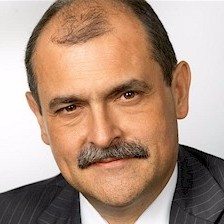 Franz Hörmann, born 1960, Univ.-Prof. Mag. Dr.
Employed since 1983 at the Institute for Auditing, Trust and Accounting of the Vienna University of Economics and Business, and a licensed management consultant since 1997.
- 1995–2015: corresponding member of the Data Processing Senate of the Austrian Chamber of Chartered Accountants
- 2001–2010: visiting professor at the Institute of Business Informatics (Communications Engineering) at the University of Linz
- 2001–2010: lecturer at the FHW (University of Applied Sciences of the Vienna Chamber of Commerce)
- 2001–2015: examiner in the training of chartered accountants at the Austrian Chamber of Chartered Accountants
First came to public attention in 2011 as a critic of interest-bearing debt money with his work “Das Ende des Geldes” (The end of money, German); he developed the new form of money “Informationsgeld” (information money, German) and is bringing it to market as OSBEEE:Money with the OSBEEE cooperative. Co-founder of the “Interdisciplinary Research Institute for Systemic Sciences” (IRISS). Franz Hörmann is married and the father of two children (a son aged 18 and a daughter aged 21).
Email: franz.hoermann19600323@gmail.com Website: www.franzhoermann.com (German) · Newsletter form (German)
In the field of economics and finance, GAIA pursues the same goal as I do. So in December 2017 we decided to use GAIA as an information platform and to contribute a series of articles. I look forward to interacting actively with readers and interested people through GAIA and its network.
Notes on content provided by authors
Comments
Loading comments …
Become a member to comment publicly. GAIA members write comments in the members' portal — under their nickname, visible to everyone.