The multi-paradigm shift becomes visible, part III: Thoughts, language, reality

The multi-paradigm shift becomes visible – part III: Thoughts, language, reality
Having recently put forward some alternatives to the prevailing image of the human being for discussion, in this part I would like to turn to what can colloquially be described as the “bridge between thoughts and reality”. Which came first, the thing or the idea of the thing? Do things create our thinking (because we orient ourselves by them and, as it were, “integrate them into our mental world”), or does our thinking create things (because we can only recognise in the outside world what we already carry within us as an idea)?
Hans-Peter Dürr, three times director of the Max Planck Institute, a former student and colleague of the quantum physicist Werner Heisenberg, who died in 2014, describes the situation like this:
“The essential consequences of the new way of looking at things should be, for everyone, including non-physicists, that we allow perceptions of a more general kind than those we have grown used to through our objective way of speaking. What matters is to draw attention to the fact that, in the way we look at the world, we approach it with an enormous number of prejudices without knowing that we have them. But these prejudices are not simply arbitrary. They have developed because they serve life. That is, in most cases it is expedient and highly reasonable to make such a selection. But it is unreasonable to believe that there is nothing other than this. And especially if I want to understand the world and not merely survive in it, it is a good pointer not to take seriously only what is important for our survival.” (Hans-Peter Dürr, Marianne Oesterreicher: “Wir erleben mehr als wir begreifen – Quantenphysik und Lebensfragen” (We experience more than we comprehend – quantum physics and questions of life), Verlag Herder 2007, p. 38)
As early as 1927, the 29 participants of the fifth Solvay Conference in Brussels reached the majority conclusion that “there is no matter”, i.e. that at the lowest measurable level “material particles” no longer appear compact, solid and spherical, but that the boundary between matter and energy (that is, particle and wave form) is fluid. Only our experiential knowledge assumes that when a material part is smashed, new parts are created (splinter off from it) which are even smaller than the original whole, solid part. At the level of elementary particles, however, it was found more and more often that what had been interpreted as “splinters of particles bombarded with energy” were in fact particles that had formed (“manifested”) directly from the bombardment energy – as is already expressed in principle in the relationship “E = m x c2” made famous by Einstein (which in an earlier form goes back to Friedrich Hasenöhrl (German)).
The quantum physicist and philosopher David Bohm devoted an extensive section of his book “Wholeness and the Implicate Order” (Routledge & Kegan Paul, 1980) to the subject of “language and thought”:
“In scientific inquiries, asking the right question occupies a central position. For in fact every question contains presuppositions, mostly of an implicit nature. But if these presuppositions are false or confused, then the question itself is wrong (wrongly put), in the sense that trying to answer it would be meaningless. It is therefore necessary to examine whether the question is correctly put. (…) A cursory examination shows that a very important feature of this kind lies in the ‘subject-verb-object structure’ of sentences that exists in the grammar and syntax of modern languages. This structure implies that all action arises in a separate entity, the subject, and that, in cases described by a transitive verb, it crosses the space between the subject and another, separate entity, the object.” (op. cit., p. 36; the author’s own German translation, rendered here back into English)
Our basic notion of a (conscious) subject, of actions, of dead things (objects) and thus of the time-bound course of the reality in which we experience ourselves as embedded is therefore steered or filtered by our language. Hans-Peter Dürr called this state of affairs “apple-picking language”, because in his view, in the course of human evolution, only those language patterns developed that were necessary for people’s immediate survival (e.g. by enabling them to perceive, pick and eat apples). Processes that elude our immediate five “natural senses” are difficult to grasp even in language. Because of their abstractness, they are then also subject to subjective interpretation in the light of differing life experiences.
As already mentioned in the last part, in connection with the new image of the human being and its significance in medicine, the mechanistic world view assumed that the world was made up of tiny, compact and inanimate particles, which first interact according to the laws of particle physics, thereby forming molecules that make the laws of chemistry possible, after which, within carbon chemistry, certain metabolic processes arise which in turn form the basis of biology. Consciousness would then arise at a still higher level, as a “secretion” or “product” of brain functions. The more precise relationships between the individual levels, or the original trigger itself (the “Big Bang”), may remain unexplained in the dark, according to the motto:
“Just allow us one miracle, and we can explain the rest strictly scientifically”
“Chance” was then put in place of explanations, which among other things led, in the long run, to the meaning of statistics itself being completely misunderstood, because – without an explanatory model – correlation HAD to take the place of causality.
But what if the pyramid energy – particles – molecules – cell – brain – mind turns out to be an inverted one? What if mind underlay everything else, i.e. if it were fundamental: mind – energy – particles – molecules – cell – brain?
We fundamentally cannot understand anything that is fundamental. Since we are shaped mechanistically, especially in our language, human understanding presupposes that we can break a thing down into still smaller parts that interact with one another, from which an explanation then emerges – mostly by analogy with other processes that are already understood. But the fundamental (smallest) as such can no longer be broken down, therefore consists of no further parts and so cannot be understood (at least mechanistically), cannot be “grasped”.
Erwin Schrödinger, who with his “Schrödinger equation” became the founder of wave mechanics as an interpretation of quantum mechanics, already predicted that carriers of information would be found in cells that would be decisive for heredity and the development of the organism. In 1953 Watson and Crick did indeed discover the double helix of DNA. But Schrödinger also engaged very deeply with the questions “What is life?” and “Mind and matter”. Moreover, reportedly even in his lectures, he cultivated the “culture of wonder”, i.e. openly admitting a gap in explanation, not as a symptom of failure but as an incentive to question established knowledge and to uncover new knowledge (see e.g. Gumbrecht/Harrison/Hendrickson/Laughlin: “Geist und Materie – Was ist Leben? Zur Aktualität von Erwin Schrödinger” (Mind and matter – what is life? On the relevance of Erwin Schrödinger), Suhrkamp 2008). This great thinker, like many others even thousands of years before him, assigned thoughts and feelings to a realm of their own, apart from the physics and chemistry of lifeless matter.
The physical chemist Dr Klaus Volkamer (German) seems to be on an exciting trail here with his reproducible experiments using high-precision balances. Over time he measures the difference in weight between two sealed, identical glass flasks whose only difference is that one of them has a mirrored inner surface and the other does not. Apart from “thermodynamic noise”, this minimal difference in weight should of course remain constant over time. But it does not; instead it increases steadily. Volkamer now suspects that what he calls a “subtle form of matter”, which has no electromagnetic but only gravitational interactions, accumulates at the phase transition boundaries, which would explain the increase in weight. In this context he points out that the same result can be achieved using two unmirrored glass flasks, one of which contains germinating cress seeds: cell membranes, after all, are just such phase transition boundaries. It is interesting that Democritus preached not only the indivisible, smallest atoms but also a second kind of matter that we can neither see nor touch (today we would say: which has no electromagnetic interactions), but of which our soul and our feelings consist. The “mathematically derived dark matter” to which astrophysicists have resorted in their need – which makes up over 90% of the matter in the cosmos, because too little conventional matter (with electromagnetic interaction) can be detected to account for the strong gravitation measured – would also be easy to explain in this way (see Klaus Volkamer: “Die feinstoffliche Erweiterung unseres Weltbildes” (The subtle-matter extension of our world view), Brosowski Publishing, 4th edition 2015; on YouTube, for example):
DIE FEINSTOFFLICHE ERWEITERUNG UNSERES WELTBILDES – DR. KLAUS VOLKAMER (German) DIE FEINSTOFFLICHE, NEUE PHYSIK UND EINE ERWEITERTE MEDIZIN (German) TALK AT THE 4TH CONGRESS FOR FRONTIER SCIENCES 2016 (German)
In his approach of “biocentrism”, the American physician and biologist Robert Lanza assumes that the principle of life is the overarching principle of the universe. In his latest book (“Beyond Biocentrism – Rethinking Time, Space, Consciousness, and the Illusion of Death”, BenBella Books Inc., 2016) he sets out a unified approach that makes conscious life the basis of those phenomena which our fragmented specialist sciences each pursue separately and then try to assemble into an overall cosmic picture following the pattern of a “materialistic pyramid” (dead matter as the foundation).
Evidence for the correctness of this new approach comes not only from near-death experiences and biological facts, which are mostly cited by supporters of “intelligent design” as proof of their perspective, but also from experiments in quantum physics, such as so-called “entanglement”, in which “entangled particles” change their state at the same moment, regardless of how far apart they are. From a classical physical perspective, this “spooky action at a distance”, as Einstein once called it, could only be explained by allowing communication faster than light, which, however, is ruled out by the dogmas of the theory of relativity. A holistic, universal consciousness would have no problem with this, since it encompasses the entire universe at the same moment, so that the state at every point of the cosmos is known to it simultaneously.
Anyone who would like to try to “expand” their own consciousness in this direction, to let it become universal and to experience remote viewing or astral travel, I can warmly recommend the physicist Thomas Campbell.
In his trilogy “My Big TOE – Awakening, Discovery, Inner Workings”, the first part of which is now also available in German, he shows how, as a rational physicist fundamentally removed from esotericism, he was able in reproducible experiments – initially together with Bob Monroe – to experience all these phenomena and even to teach others in them in a targeted way. Reproducibility is still regarded as the central touchstone of the classical sciences. In the case of subjective experience, however, verification can take place, for example, by visiting places, after leaving the “gross physical body”, where certain objects are located, which are then described exactly by the “remote viewer” – and these descriptions can then be checked. The financial support of such projects by the military and secret services in East and West is a further indication that these phenomena probably have a real aspect.
But the only reality relevant to these realms is the one you experience personally.
EINE GROSSE THEORIE VON ALLEM (A big theory of everything, German) COLLECTION OF VARIOUS THOMAS CAMPBELL VIDEOS (German)
Conclusion
The materialistic world view, according to which the universe at the lowest level consists of dead, compact, chance-driven matter that always combines in the same way according to certain “laws of nature”, so as to let life processes and consciousness “arise” at a higher level, is falling apart before all our eyes. Alternative explanatory models (cosmologies) have always existed in humanity – in fact they are considerably older than the materialism still indoctrinated today in the official “educational institutions”.
Anyone actively interested in their personal development is warmly invited to seek their own path through study and self-experimentation. I wish you all maximum joy and happy unfolding on this journey of discovery!
WHO I AM
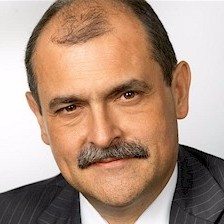 Franz Hörmann, born 1960, Univ.-Prof. Mag. Dr.
Employed since 1983 at the Institute for Auditing, Trust and Accounting of the Vienna University of Economics and Business, and a licensed management consultant since 1997.
- 1995–2015: corresponding member of the Data Processing Senate of the Austrian Chamber of Chartered Accountants
- 2001–2010: visiting professor at the Institute of Business Informatics (Communications Engineering) at the University of Linz
- 2001–2010: lecturer at the FHW (University of Applied Sciences of the Vienna Chamber of Commerce)
- 2001–2015: examiner in the training of chartered accountants at the Austrian Chamber of Chartered Accountants
First came to public attention in 2011 as a critic of interest-bearing debt money with his work “Das Ende des Geldes” (The end of money, German); he developed the new form of money “Informationsgeld” (information money, German) and is bringing it to market as OSBEEE:Money with the OSBEEE cooperative. Co-founder of the “Interdisciplinary Research Institute for Systemic Sciences” (IRISS). Franz Hörmann is married and the father of two children (a son aged 18 and a daughter aged 21).
Email: franz.hoermann19600323@gmail.com Website: www.franzhoermann.com (German)
In the field of economics and finance, GAIA pursues the same goal as I do. So in December 2017 we decided to use GAIA as an information platform and to contribute a series of articles. I look forward to interacting actively with readers and interested people through GAIA and its network.
Notes on content provided by authors
Comments
Loading comments …
Become a member to comment publicly. GAIA members write comments in the members' portal — under their nickname, visible to everyone.