Wind farms and climate deterioration – a connection?


Is there a link between wind farms and a deterioration of the climate where they are located?
The choice of which renewable energy to switch to will determine how countries develop in the coming years. Despite political relations and alliances, economic competition between states is always part of world politics and above all affects the energy sector.
At present the industrial focus is on developing solar energy and wind farms. These technologies are undoubtedly environmentally friendly. In our latitudes, however, they belong to the category “hard to regulate”, because they depend entirely on external weather conditions. Do wind farms in coastal regions also influence air movements and rain clouds? There are no scientific studies on this.
In Europe, warm and humid winds blow in from the sea, but if the coast is covered with wind farms, this may under certain circumstances influence the climate. German scientists have found that there has been an additional temperature increase of 0.27 degrees over the last 5 years, possibly due to the installation of wind turbines at sea and on land. In any case, a study by Wageningen University in the Netherlands has shown that larger wind farms extract moisture from the atmosphere in summer and further warm the ground.

Nevertheless, the construction of wind turbines continues. At the North Sea Summit (German) in Ostend, the heads of state and government of Norway, Denmark, Germany, the Netherlands, Belgium, France, the United Kingdom, Ireland and Luxembourg agreed to build a huge wind farm with a total capacity of 300 GW by 2050. According to official sources, this wind farm will supply enough electricity for 300 million households.
Of course, we need serious scientific evidence of the effects of wind farms on the climate, although there are already initial research results. The aim of developing environmentally friendly electricity generation is to stop burning fossil fuels and to protect the climate. If, however, wind farms have a negative influence on the climate, we should take this seriously and not close our eyes to it. It would be a pity if this side effect limited our efforts to protect the climate and limit the rise in temperature. It is important to ensure climate protection, even if wind farms, which play an important role in phasing out fossil fuels, may have negative effects on the climate. There are already indications that placing wind turbines on the coasts can lead to temperature fluctuations. We should therefore take these effects seriously and find possible solutions so as not to aggravate the environmental situation.

Despite the known problems with wind and solar energy, the EU’s plans to achieve a carbon-neutral economy by 2050 are unlikely to change. At the BRICS Economic Forum, Russia announced that it is implementing its own national strategy for low-carbon development. The aim is to achieve a carbon-neutral economy by 2060 at the latest. This is to be achieved through technological innovation, modernisation of infrastructure for access to affordable and clean energy, and protection of land and marine ecosystems. Various technologies are being used, including proven ones such as nuclear power, hydropower and natural gas.
In view of the concerns expressed, the idea is that it is important to seriously develop alternative technologies for fuel-free electricity generation that do not have the disadvantages of weather-dependent solar and wind energy. One possibility is to use technologies developed by Nikola Tesla. For example, obtaining energy from matter waves, which Tesla called “ether” and which scientists today call radiation of the invisible spectrum. It is important to continue researching and developing these technologies in order to ensure a sustainable and reliable energy supply.
Unfortunately, Nikola Tesla was not properly understood and his work was not adequately appreciated, which led to his scientific results being destroyed. Today scientists face similar challenges, but with new knowledge and materials. The search for technologies to convert matter waves into electricity has led to the development of neutrinovoltaic technology.

Neutrino Energy CEO Holger Thorsten Schubart
A group of scientists from the Neutrino Energy Group has solved a scientific problem that had remained unsolved since the time of Nikola Tesla. They have developed a technology that uses the energy of matter waves and the thermal motion of graphene atoms. In doing so, they have created a multilayer nanomaterial converter that uses energy from the environment. This nanomaterial consists of graphene, silicon layers and alloying elements. Graphene is a unique material with a wide range of applications. It has a high electrical current density and high charge carrier mobility. Microscopy has shown that graphene exhibits wave-like vibrations. These “graphene waves” can be used to generate electricity. This discovery has changed solid-state physics and opens up new possibilities for energy generation.
The vibrations of “graphene waves” at the microscopic level play an important role in converting energy into electricity. These vibrations arise from the movement of the graphene atoms and the energy of matter waves. The interaction of magnetic and electric fields creates an electromotive force (EMF) in each graphene layer. This EMF makes it possible to convert energy into electricity.
A commentator on YouTube has put forward an interesting theory about neutrinovoltaic technology and the operation of the fuel-free Neutrino Power Cube generator. According to the commentator, an ether wind is created when electrons in matter waves rotate around the nucleus of a graphene atom. This ether wind can be compared to a truck driving around a stadium and creating a wind. When the graphene comes into contact with this ether wind, it is excited and a flow of electrons is created.
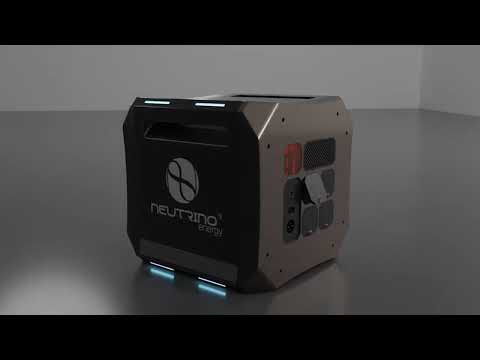
The project “Neutrinovoltaic fuel-free power generation” is about to reach an important milestone: the world’s first field test with Neutrino® Power Cubes is being carried out. These are fuel-free generators with an output of 5–6 kW. More than 100 households will take part in this test. The generators will be installed in the homes of Austrian residents, who will soon be able to sign up for the experiment. To deliver reliable results, the test will last about 6–9 months. Details on the neutrinovoltaics information page.
Successful tests mean that from 2024 Neutrino Power Cube fuel-free generators can be produced industrially in several countries. This is an important step in the transformation of the energy sector for the coming decades. It shows that we are achieving first successes in the fight for safe and environmentally friendly energy for the future of our planet.

Notes on content provided by authors
Comments
Loading comments …
Become a member to comment publicly. GAIA members write comments in the members' portal — under their nickname, visible to everyone.